
3 poems by Sally Rosen Kindred
1 essay by Matthew E. Henry, on the poems of Sally Rosen Kindred
Mother of Exile
A 6’1”, 250 lb. football player Freudian-slipped in front of the class and called me “mom”—a surprise after answering his simple question about the assignment. I needed to help him save face. Do you love your mom? Yeah. Very much. Then we’re all good. Cause otherwise, man, I would have been worried. He laughed. The class laughed. Crisis averted. I’d grown used to Fathers’ Day cards and being called “old man” by my students, but this was the first time I was maternalized by one of them. Like this moment, these poems made me wonder how much of life is mothering, being mothered.
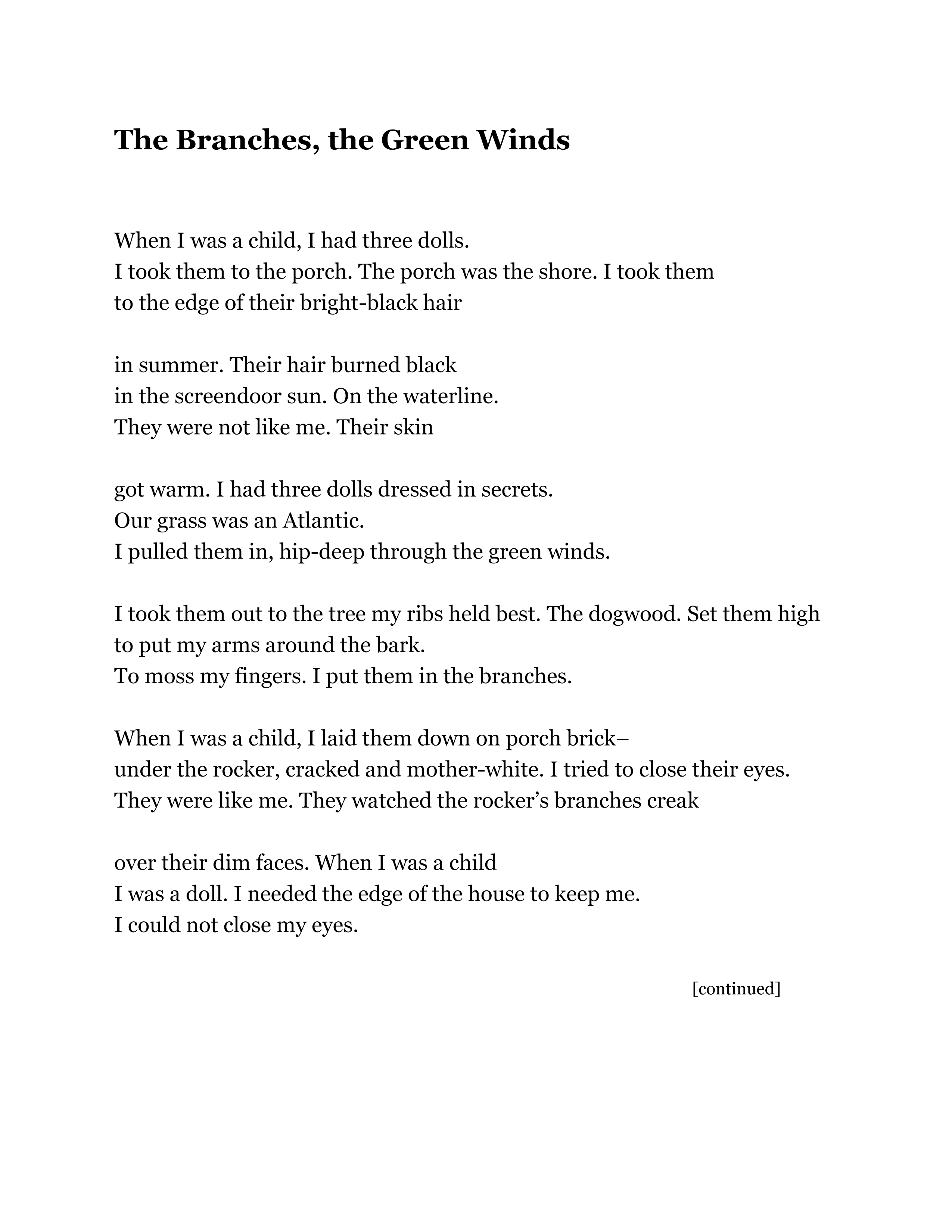
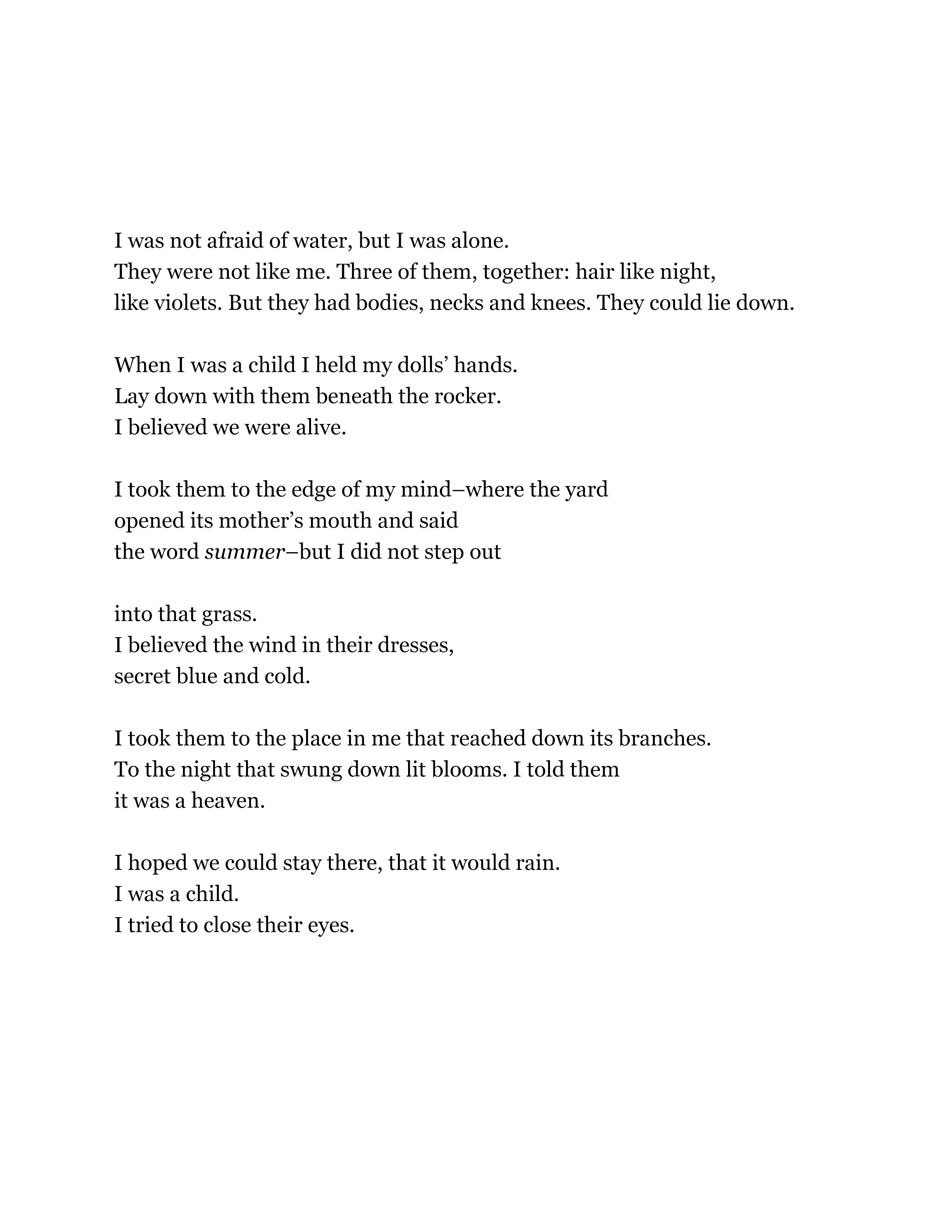
“The Branches, the Green Winds” reminds of how, when I was a child, I cared for my action figures, my siblings’ hand-me-down dolls, our toy cars and teddy bears as if they were people. GI-Joe and Barbie equally seated at the dining table and command console, feeding and being fed. How the idea of home is clutched to our young chests as we play and protect inanimate loves better than ourselves. Psychologists may argue such childhood explorations of roles and boundaries craft and expand the liminal spaces of our later relationships. For me, four walls and a closed door were sealed like the black box of my mind. There were no noises outside. No screaming voices. My eyes remained open, uninterrupted with my chosen people.
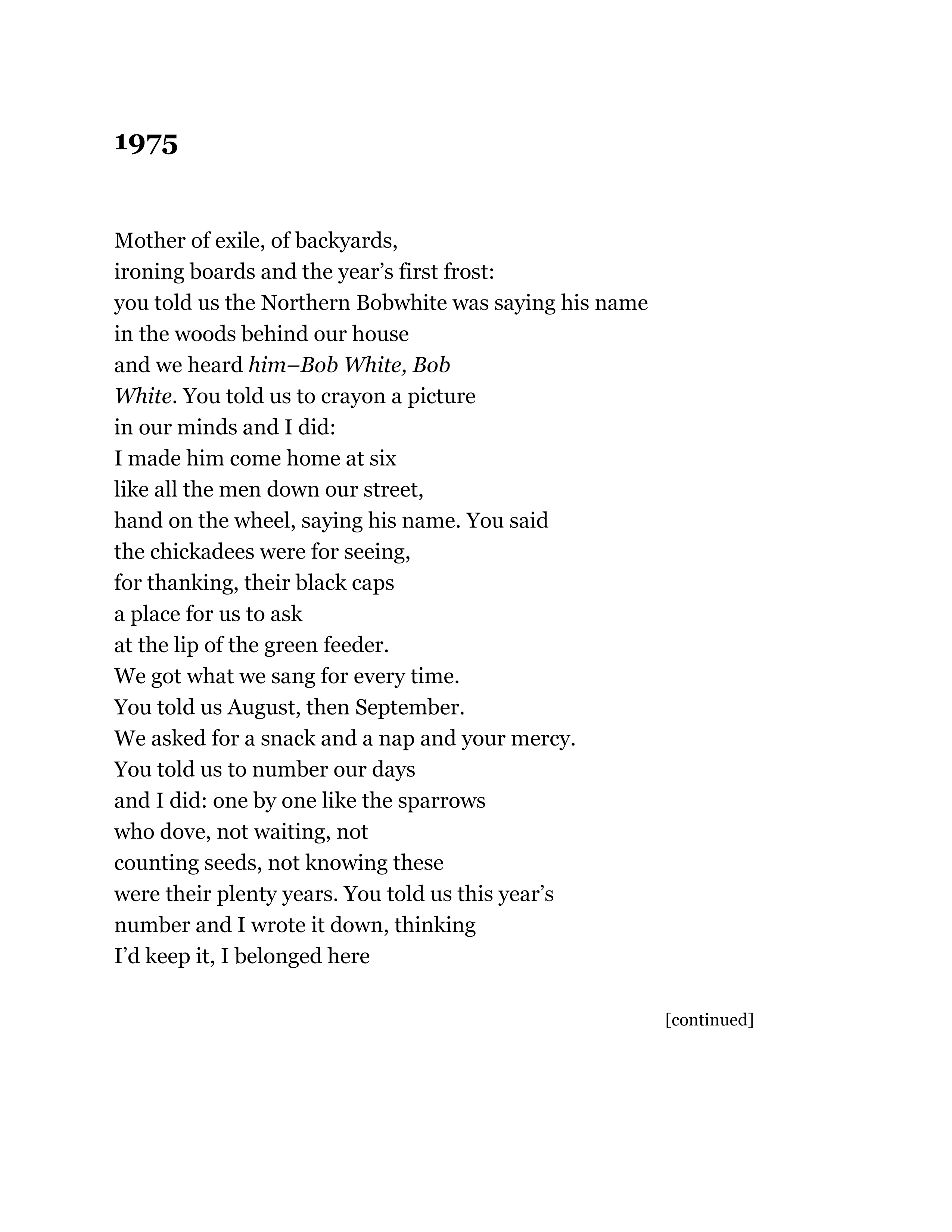
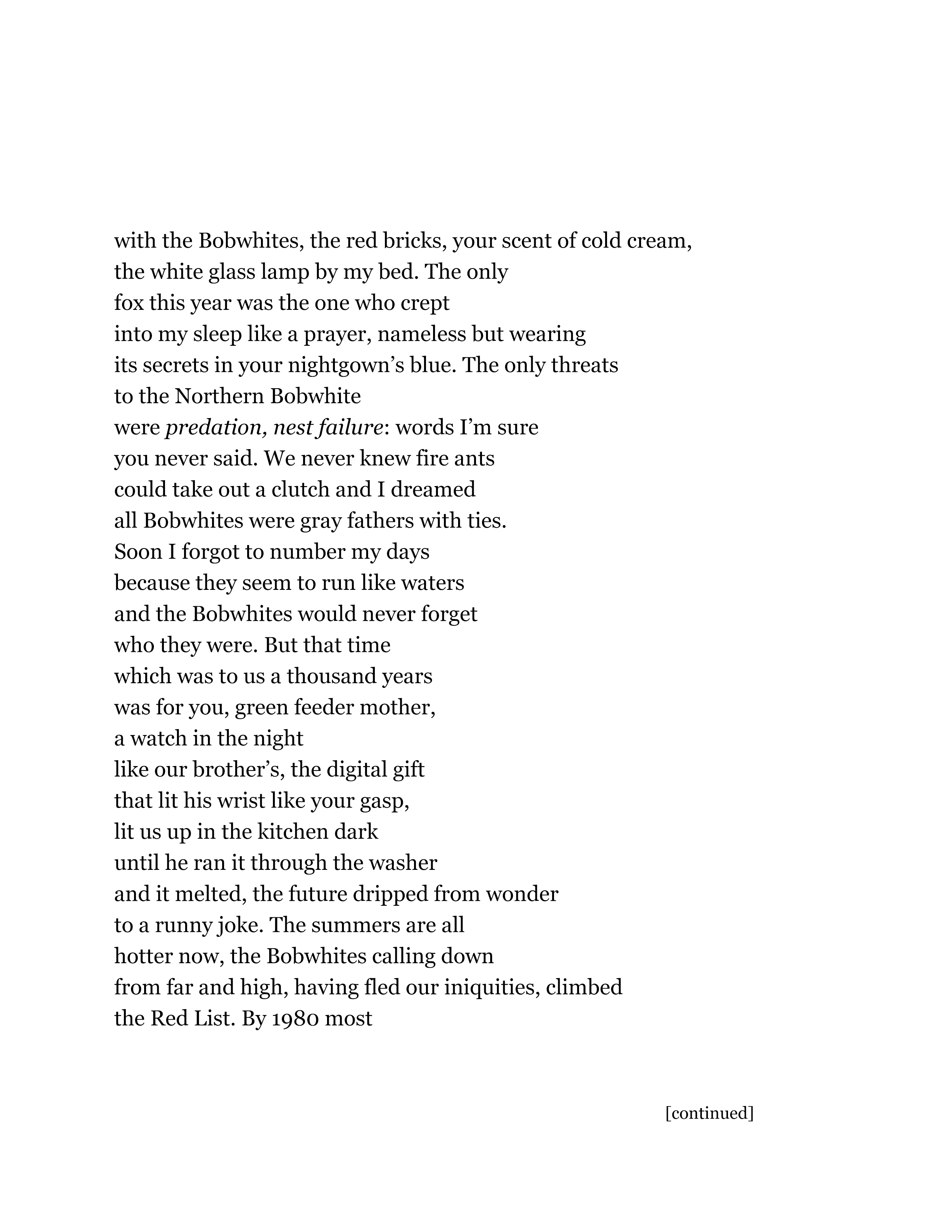
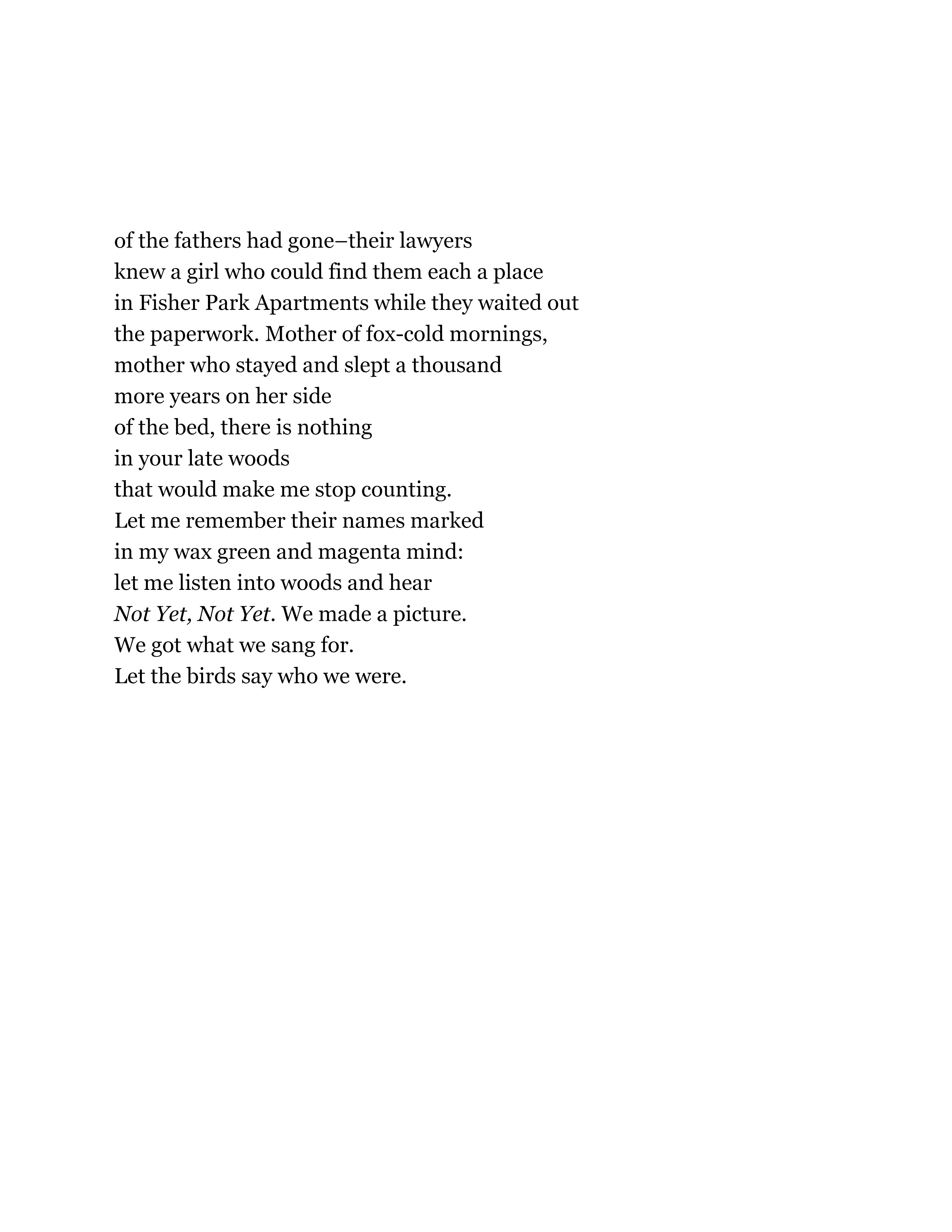
Growing up, my Jamaican mother told us many things. She told us how to name native birds. How to color within lines. How to play the piano. How to duck & cover in the back of our green Chevy—eyes closed, palms cupped over ears—if we were ever surrounded by a mob of whites, angry we went to school in their suburbs. She told us how to pray. She told us the Bible passages found in “1975” on how to count our days and (maybe) gain wisdom. How to worry less than the stressless sparrows fed and feathered by our heavenly Father. How to walk unworried by the evils that may befall our bodies tomorrow. How to believe a day and a thousand years are interchangeable to the One who sits awake in the watches of the night, meditating on what might befall our little Black bodies. Lessons she hoped we’d teach our own children.
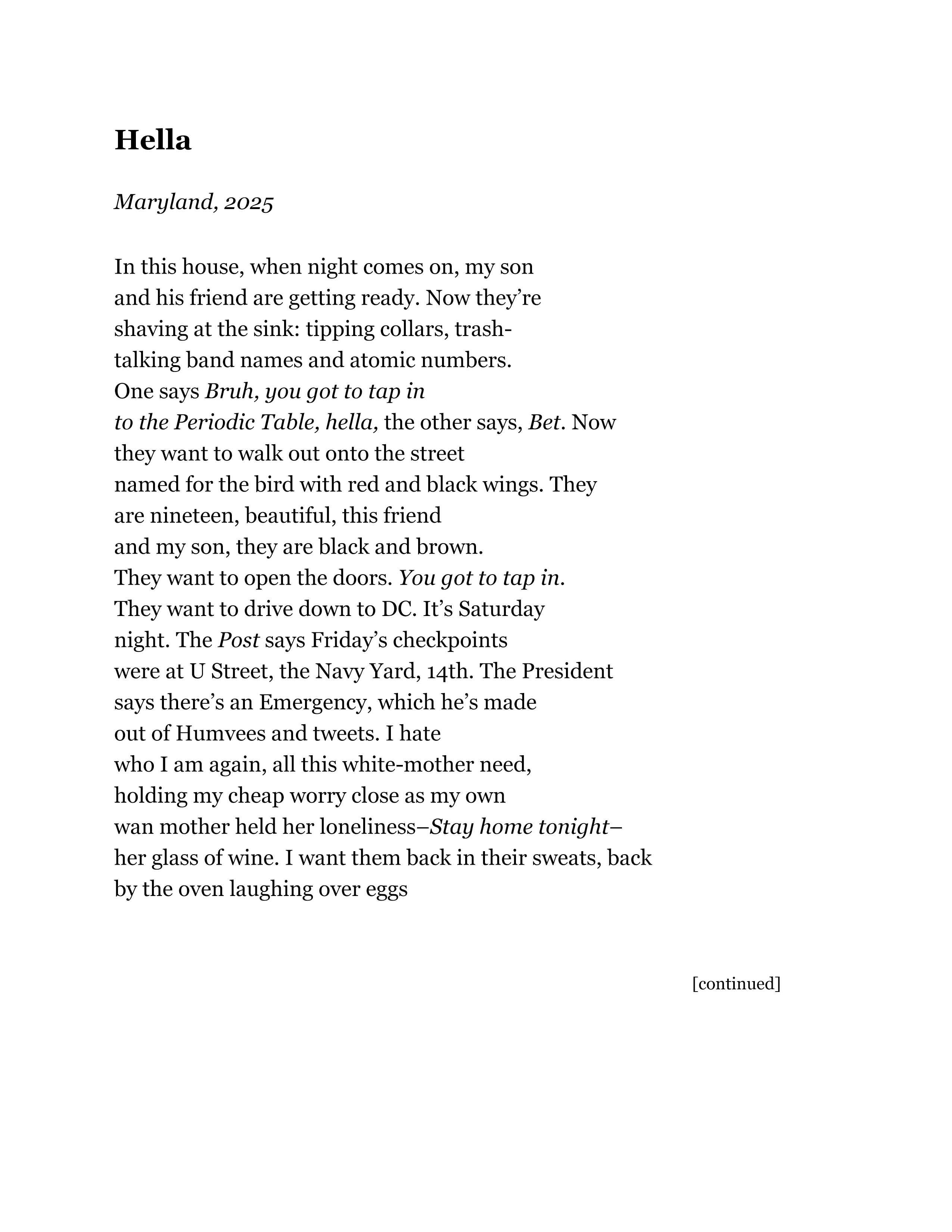
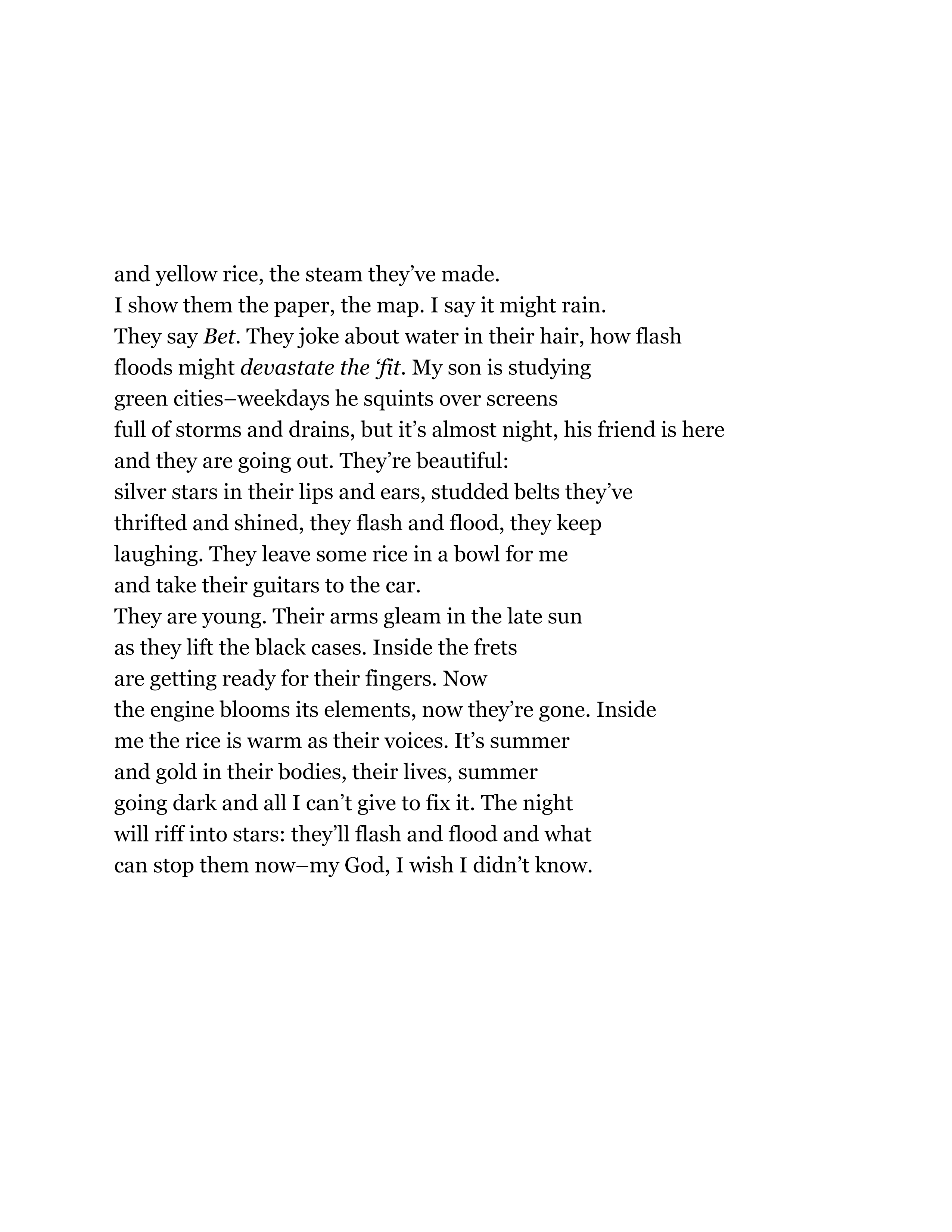
I never had children of my own. But for the first time in 26 years, all of my students are Black and Brown—like the teens in “hella,” beautifully-winged birds covered with more of my mother-worry than I previously thought possible. I too fear sending them into a world of tweeted checkpoints and ICE alerts when I must educate them on why they should care our monuments are being torn down, our history erased and rewritten. Yesterday they joked about water spilled on the classroom floor. I told them we’re being drowned, again. Today one of my young ladies asked about the difference between “race,” “ethnicity,” and “nationality.” A lesson I often taught in predominately white spaces hits different for students proud of being Haitian, Puerto Rican, Cape Verdean, Bahamian, Bajan, and Jamaican. Faces only seen as “Black” when venturing the map of lighter neighborhoods. I explained the term “African-American” as the trans-Atlantic slave trade, the hyphen representing the ocean between continents. Told them how a colleague once—without missing a beat—replied, “…and if you look real close, you can see the boat.” Only one student thought to ask if that former colleague was white.
Now: their voices,
their bodies, their lives,
I give to the stars
and the God I know. [1]
~ Matthew E. Henry (MEH)
[1]Found poem from the end of “Hella.”