
4 poems by Mike Santora
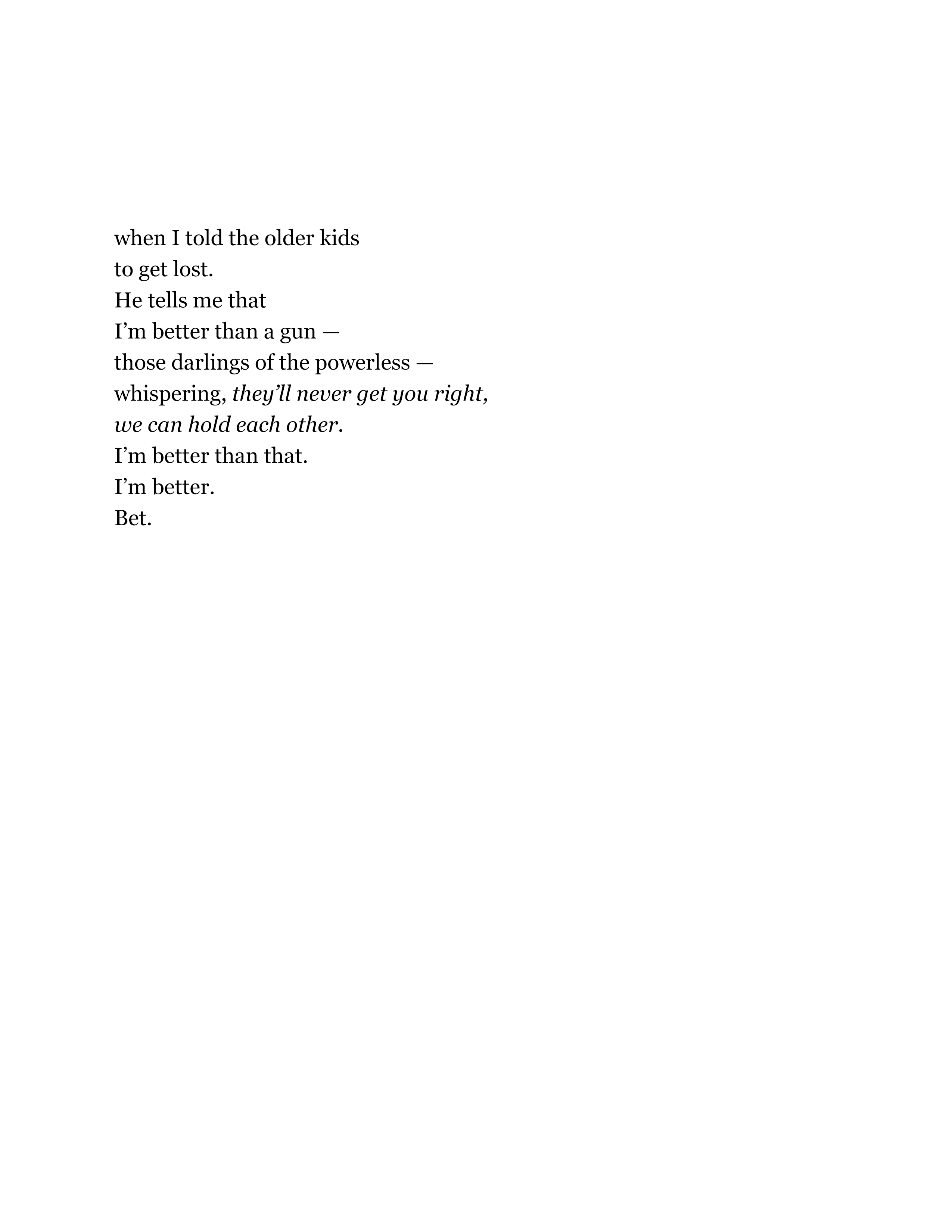
1 essay by Karen Holman, on the poems of Mike Santora
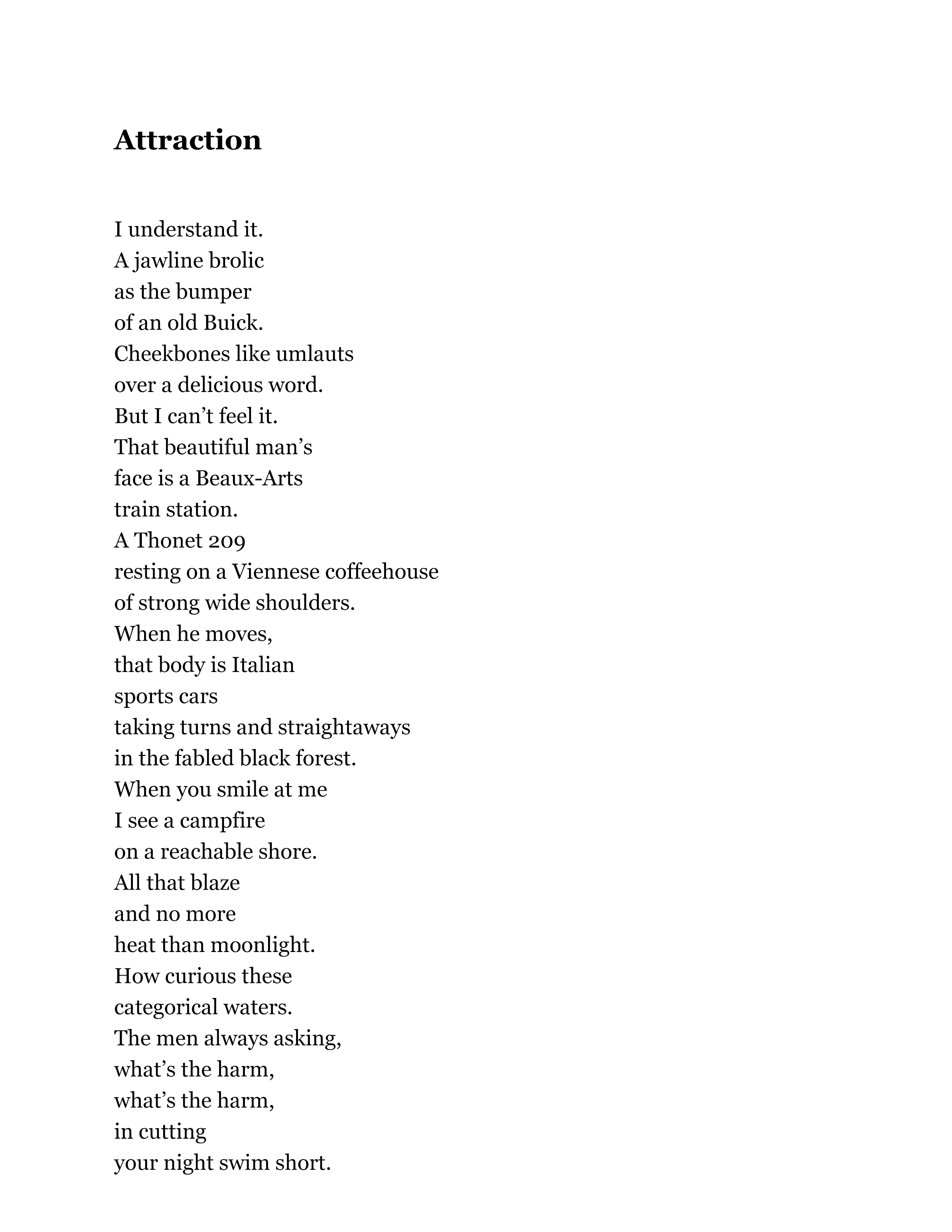
In these poems I could be overhearing someone talking to an old friend, a sibling, a lover or themself. Maybe late at night. Maybe I’ve come in at the middle of a yearslong conversation that has shifted in the retellings. If a paper airplane could skywrite, it might float these poems to a younger self and illuminate budding erotic flushes (eros touching every relationship) and suggest how these experiences would influence later relational entanglements. Clear-eyed, wry and tender, the poems create an intimate bond with a reader. They are “a campfire on a reachable shore,”—but in contrast to the beautiful man in “Attraction”—they bring me ashore and invite me to their circle of warmth.
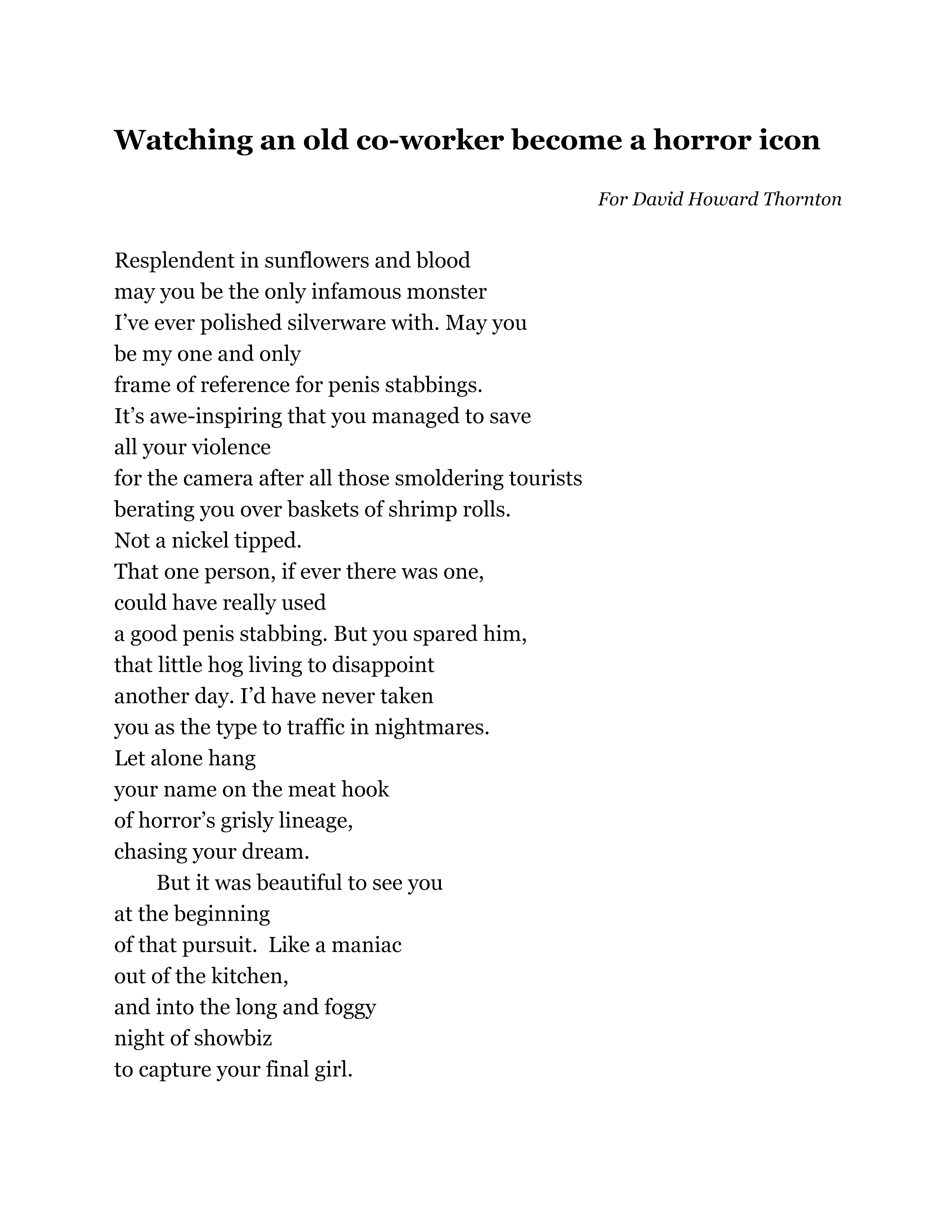
Like a child’s tongue tasting the tip of a battery on a dare or in secret curiosity, the cold foretaste of a future relationship is a shock, an apprehension, a little violence, one of the many violences that will inform every future. Who knew a former foodservice co-worker’s career would explode into spectacular, surreal mayhem in a slasher film? Or looking back, were there hints? There’s always an undertone of violence in apprehending that no one can fully inhabit another’s experience. And yet . . . in conversation you breathe another’s exhalation. Written words change the molecular structure of a reader’s brain.
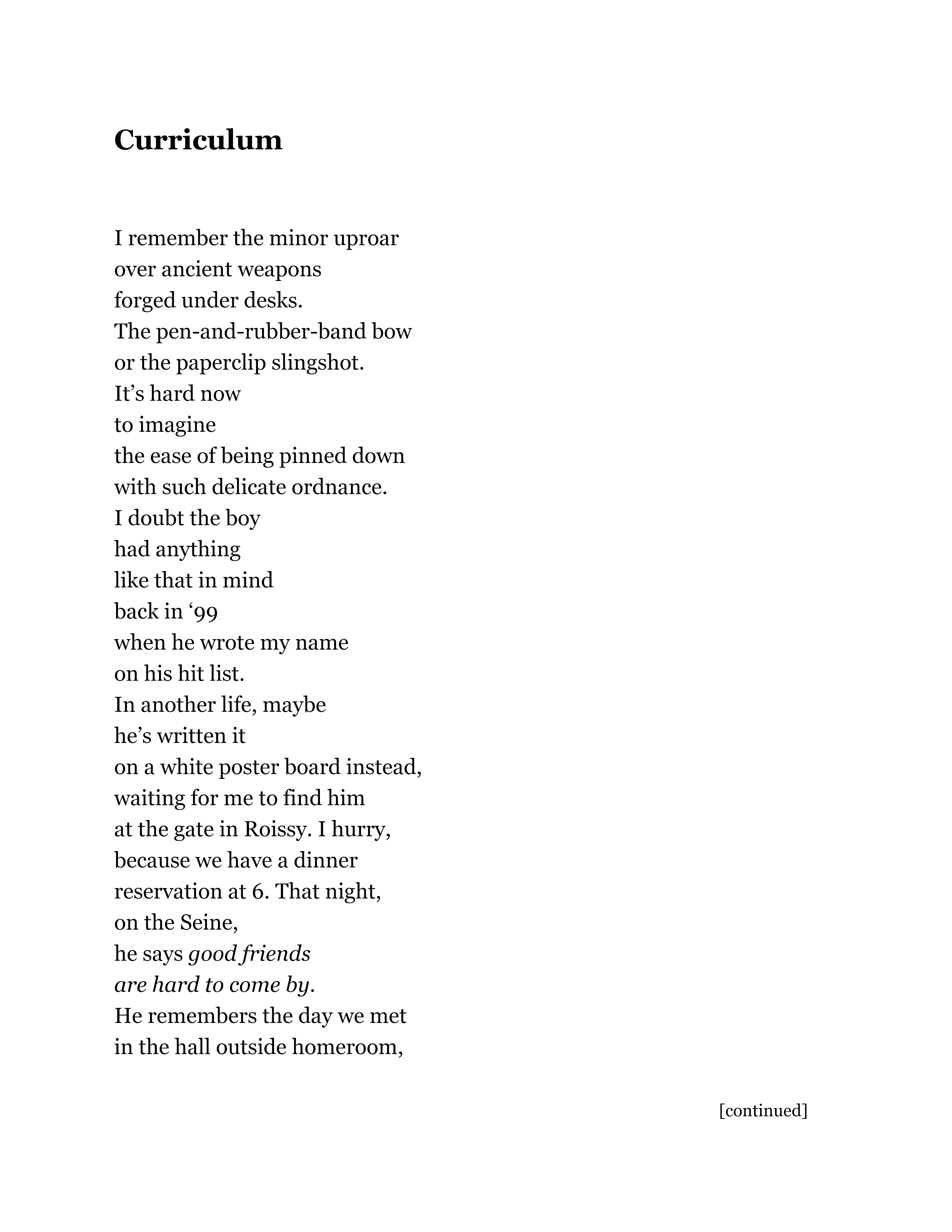
Time, perception, memory, these poems are elastic and hold intersections of experience in a tensile web that gives and contracts with economic strength—like the children’s improvised weapons in “Curriculum”—paperclip slingshots and pen and rubberband bows. The children themselves are projectiles through the dangerous passage to future. The perfect tension in these poems demonstrates how an energetic wave of future possibilities collapses into specific points caught on a screen after passing through the gate of the writer’s present moment.
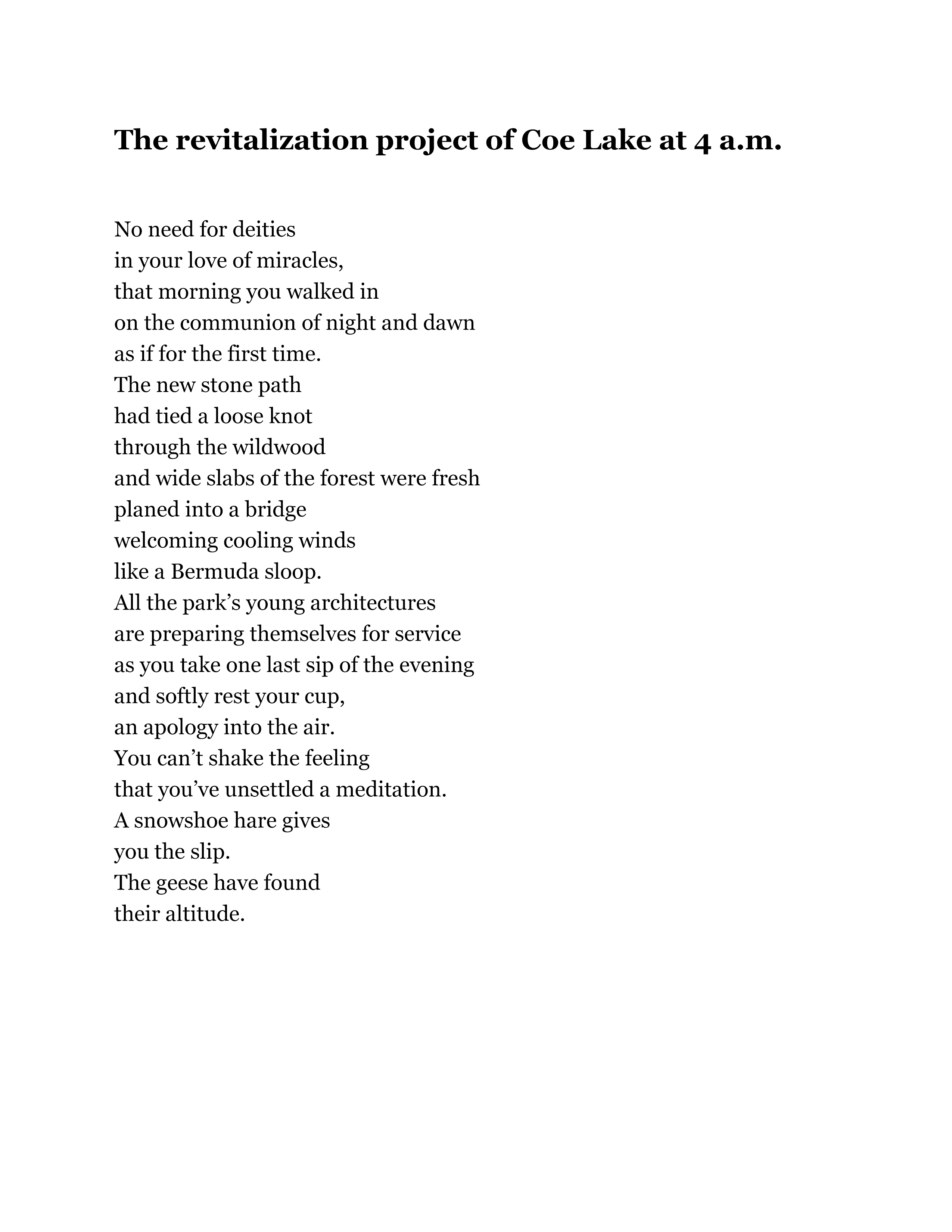
The re-creation of a recreational place at Coe Lake is also a classroom that tames the wild, socializes it. A worker, maybe the speaker themself, takes a holy sip of approaching dawn while preparing this place for encounters with the transcendent within the not-quite-feral—breathtaking, but safe enough. Congregants will gather and sing in this place for cultivated experiences.
Here in the transubstantiation of night into day, along with the worker, I taste something wild, overhear something not-human and sacred. I taste its shock on my tongue even though I’ve never been to Coe Lake, and like the geese there, I lift, and find my altitude. These poems—like the startle of an audience member’s personal conversation heard suddenly in an unexpected silence at church or in a movie theater—expand and resonate to fill the whole building.