
3 poems by Lauren Camp
1 essay by Sehee Oh, on the poems of Lauren Camp
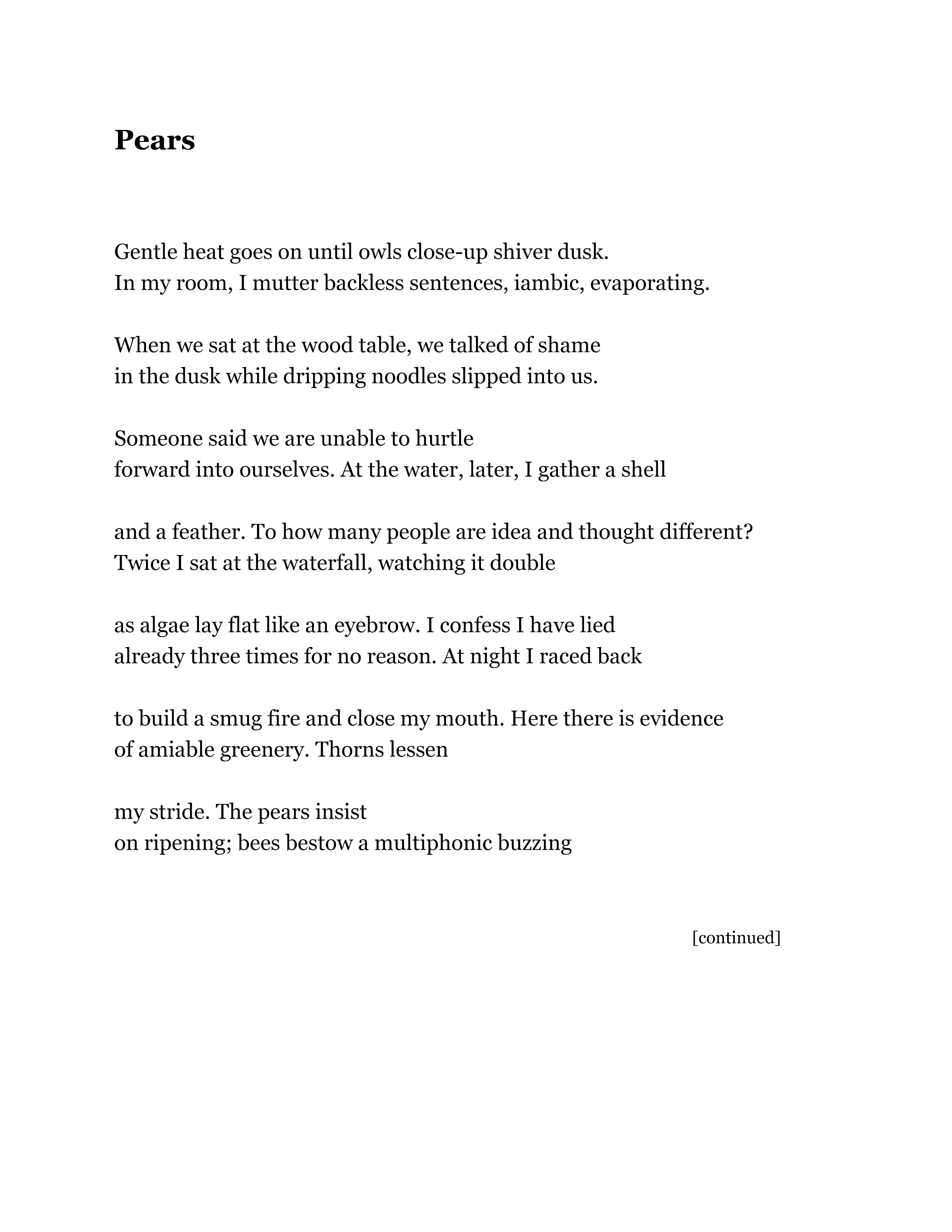
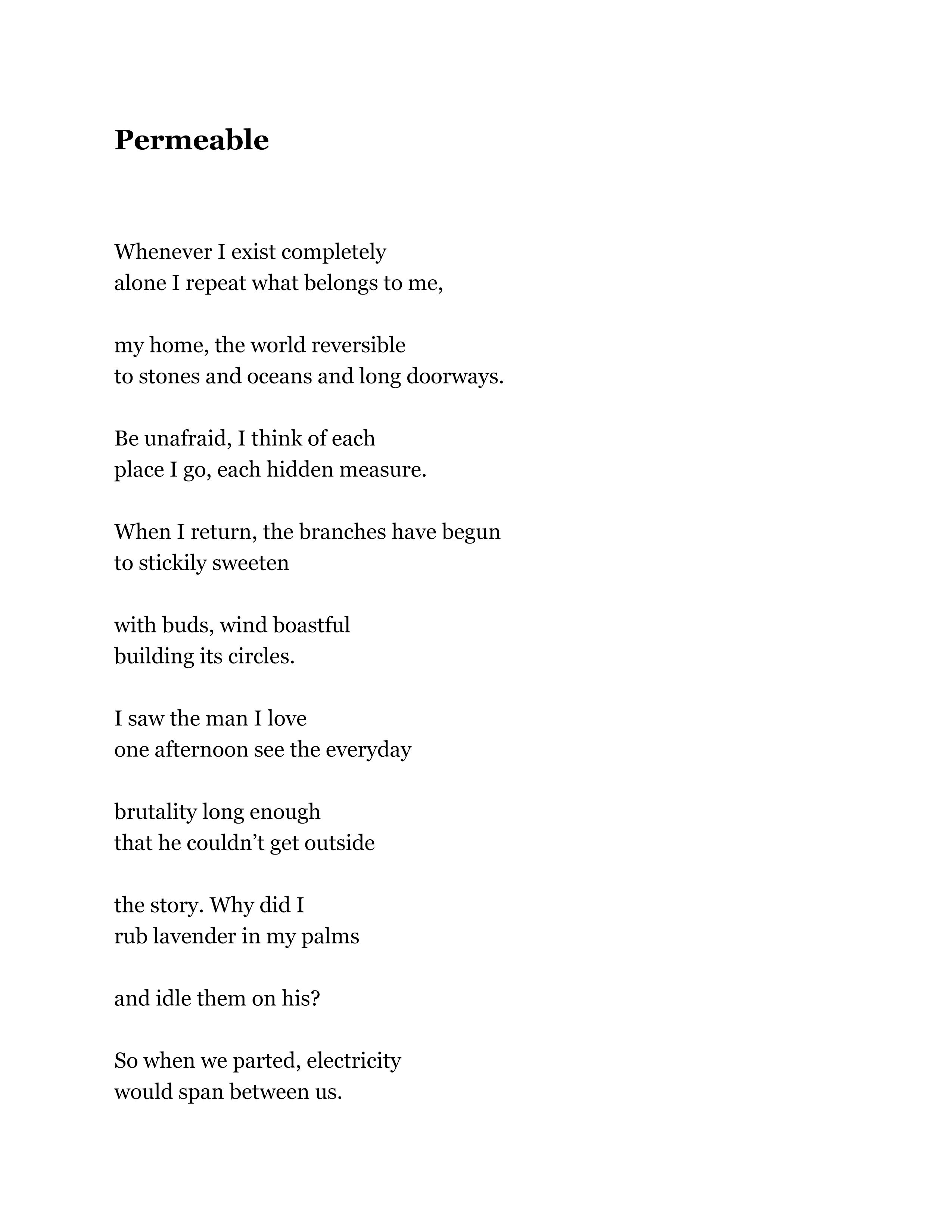
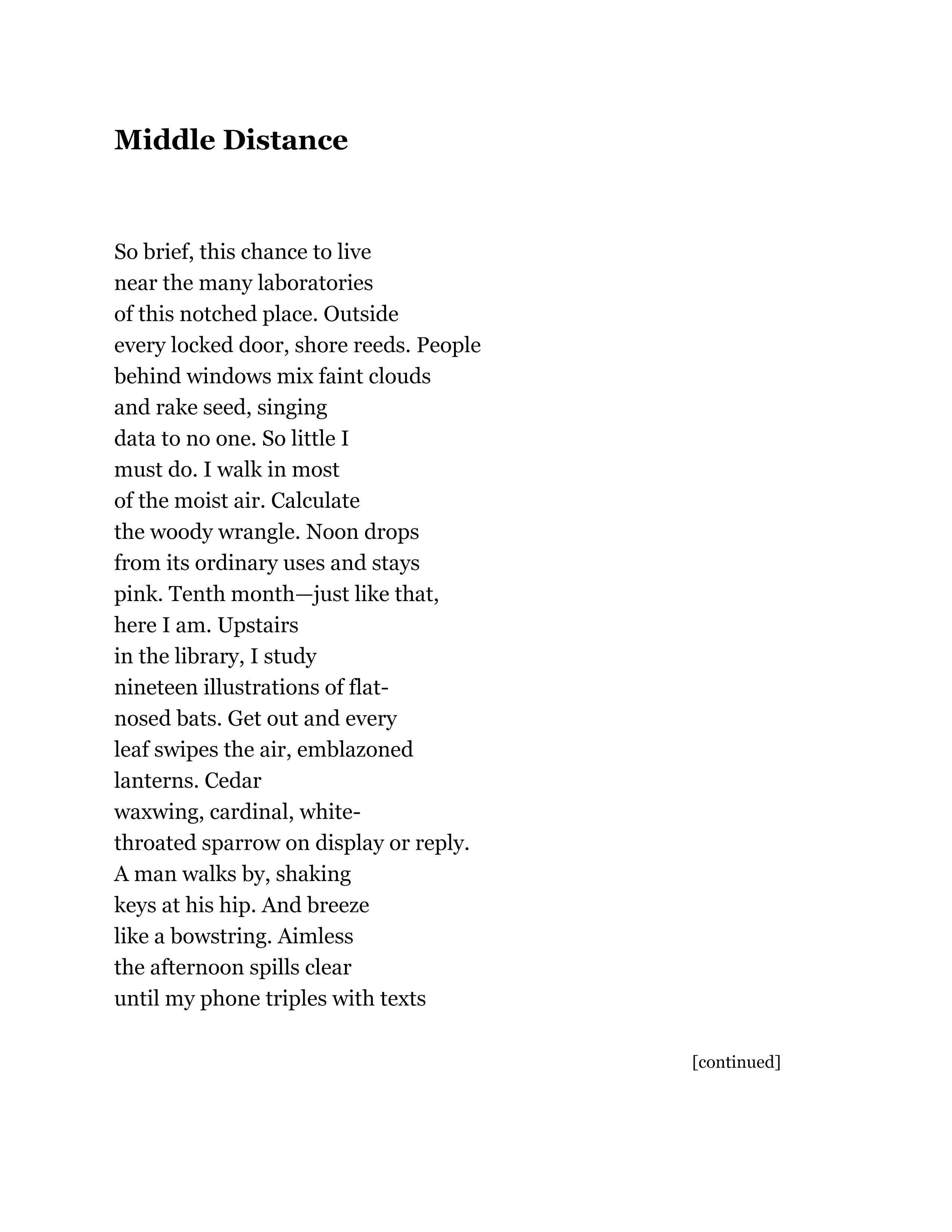
In these poems, you will learn that solitude is not empty. It is porous, or permeable, as the poem’s title suggests. In this aloneness, the speaker “walk[s] in most / of the moist air,” talks to oneself, confesses, and importantly, thinks of places of where there had been memories of. In “Permeable,” the speaker says, “Whenever I exist completely / alone I repeat what belongs to me,” then lists home, world, stones, oceans, doorways. Through being alone, the speaker observes the world around them, and things they observe enter the speaker through body and language, both physical and metaphorical. These poems show the failing of boundaries between self and the outer world, belonging and unbelonging, thought and sensation.
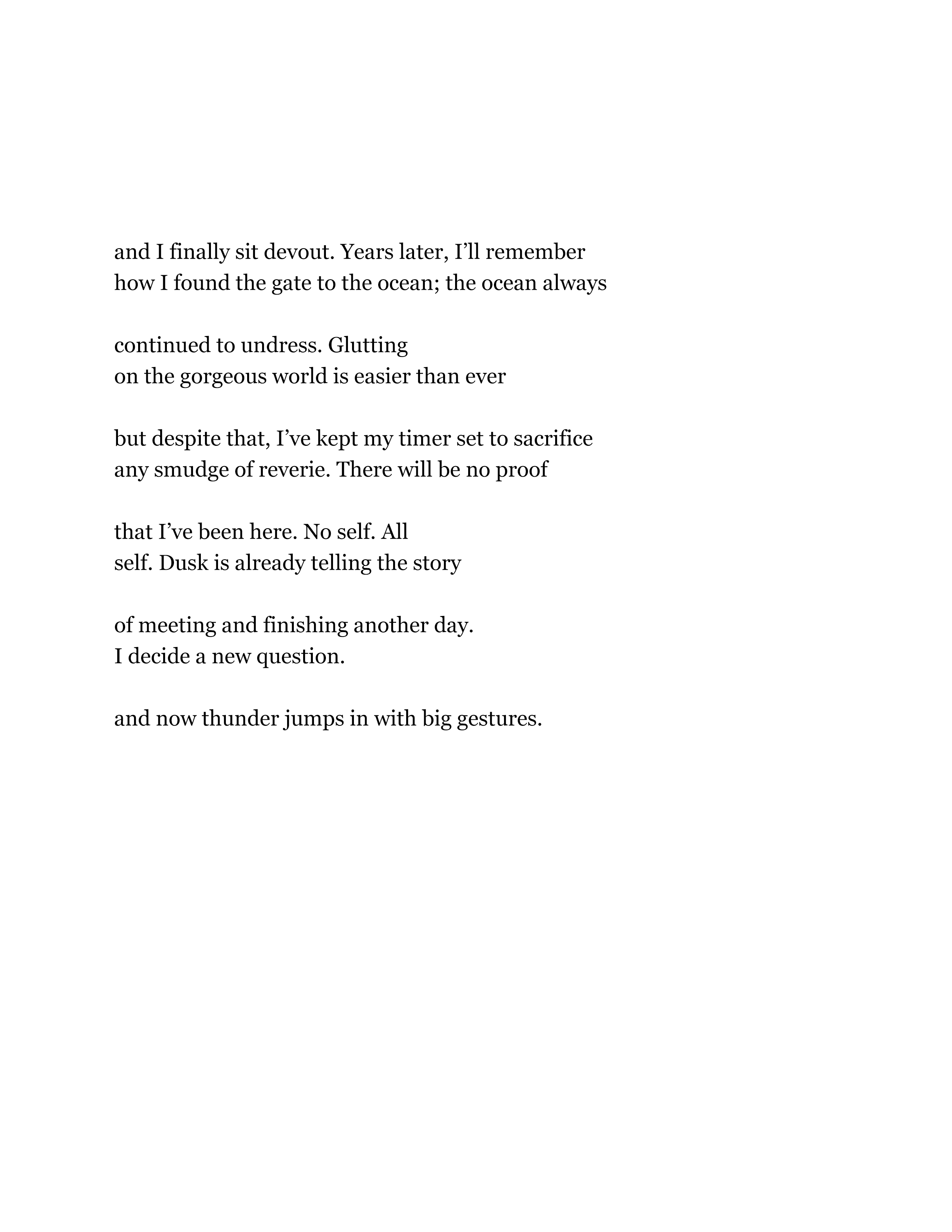
The poems are full of natural details: shore reeds, bats, leaves, birds, pears, bees, ocean, thunder, stones, branches, buds, lavender. However, these natural details do not explain the self, as the speaker puts, “There will be no proof / that I’ve been here. No self. All / self.” The poems gather evidence of presence through observation, while also doubting if the presence of self can ever be proven.
The gorgeousness of the observed objects also contribute to this as well. The beauty of the natural world, almost like a pastoral pleasure being conveyed through, distances the speaker from the rest of the world, and makes us wonder about the boundary between self and the world outside, whether that boundary is meant to fail.
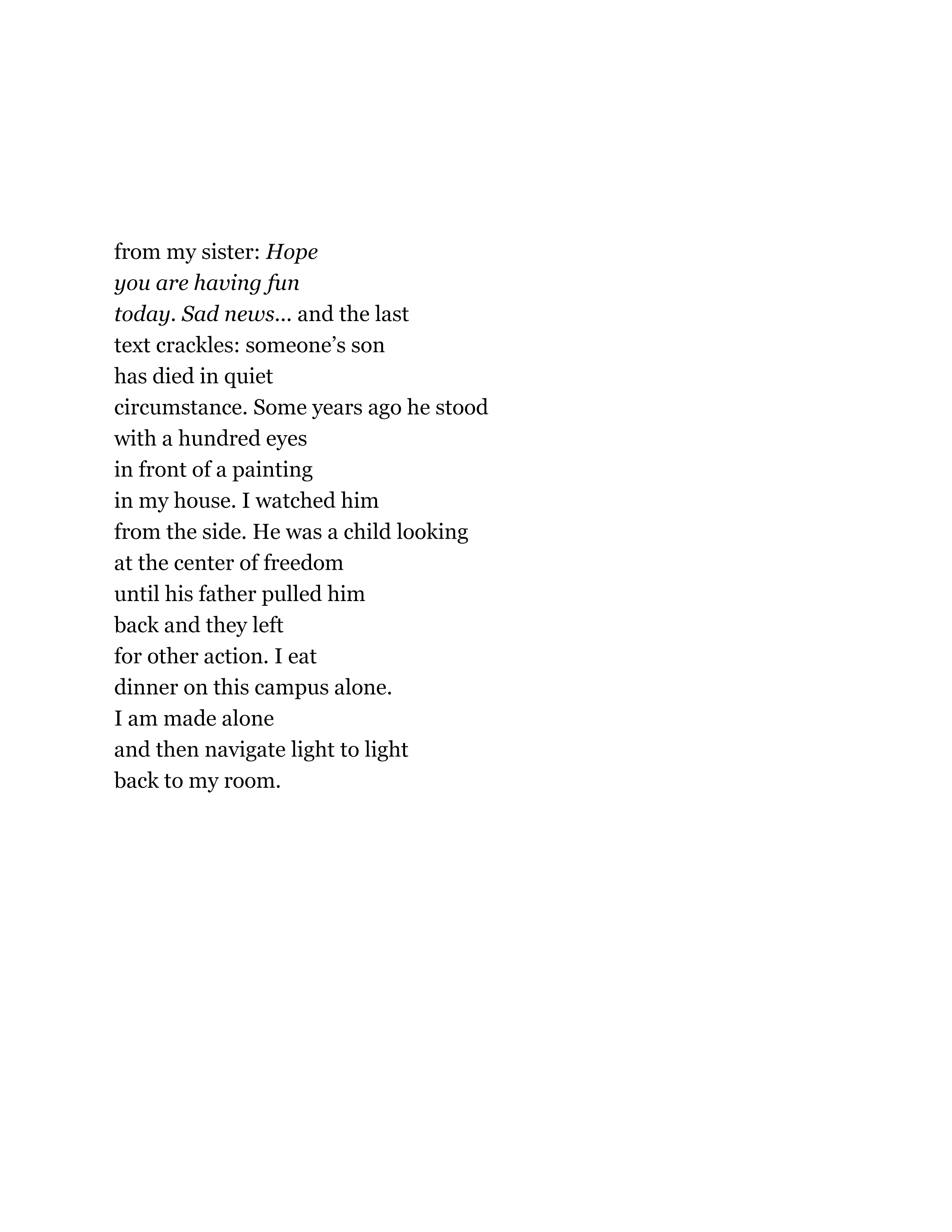
But the world’s beauty is not stable in these poems; it is constantly interrupted by grief. In “Middle Distance,” the speaker receives a text from the sister, “a sad news” that “someone’s son / has died in quiet / circumstance,” a stark, cold reality call after being submerged in this beautiful and peaceful campus environment. This sad news shows why permeability matters in this packet: the speaker, by being porous, is open to not only beauty but also susceptible to loss.
Despite the poems being about being alone and struggling to prove the self, I am not left miserable or sad reading these poems. In fact, the poems leave me meditating, thinking about the world I have created with my eyes, and hopeful that attention itself can become a form of presence. The poems do not solve loneliness, grief, or the self’s uncertainty. Instead, they show how the world continues to touch us, and how we continue to answer it by looking. In this way, the poems suggest that to be permeable is not only to be vulnerable, but also to be alive.