
3 poems by Katie Hartsock
1 essay by Mike Santora, on the poems of Katie Hartsock
A Midwestern Odyssey
Call me ravenous — I’m not beating the allegations. There has always been a certain cultural appetite for epic storytelling and myth, but I’ve always felt like a Greek tale-gastronome of particular devotion. As you might have gathered, now is a wildly exciting time for an old nerd like me. At the time of this writing, The Odyssey is everywhere, outlets are running “Mythology Weeks,” and platforms like Amazon and Netflix both have classical legend-inspired projects in the works. I can’t get enough. I am also a Midwesterner. So how lucky am I to have been met with this fantastical collection of new poems? Poems that engage with, and interrogate, the mythological tradition both globally and regionally? What a treat.
Through this triptych, our poet takes us on a clear and deliberate voyage between mythic frameworks like Aristotle’s Poetics or The Princess and the Pea and welds them to the challenges and anxieties of a working-class, Rust Belt, Midwestern existence. In doing so, the poet grapples with a hometown mythmaking of their own. Most readers of mid-20th century American poetry on to the present will be familiar with concepts like these. We see it in James Wright; Michiganders Theodore Roethke and Jim Harrison; and, of course, peak heartland-maxxing stalwart Ted Kooser. But these poems are not interested in walking the shores of the Great Lakes in old poets’ shoes. These poems are their own.
The pieces in this short collection are corporeal and achingly physical in their details. The net effect of the body living within this landscape takes center stage, not the landscape itself. The field, the river town, the land, are all more directly referenced in the works of the aforementioned Midwestern poets. In this way, the bodily toll a town can take makes these poems feel more like a spiritual ancestor to the work of Philip Levine than anyone else. In My Mother as Aristotle, we get the lines:
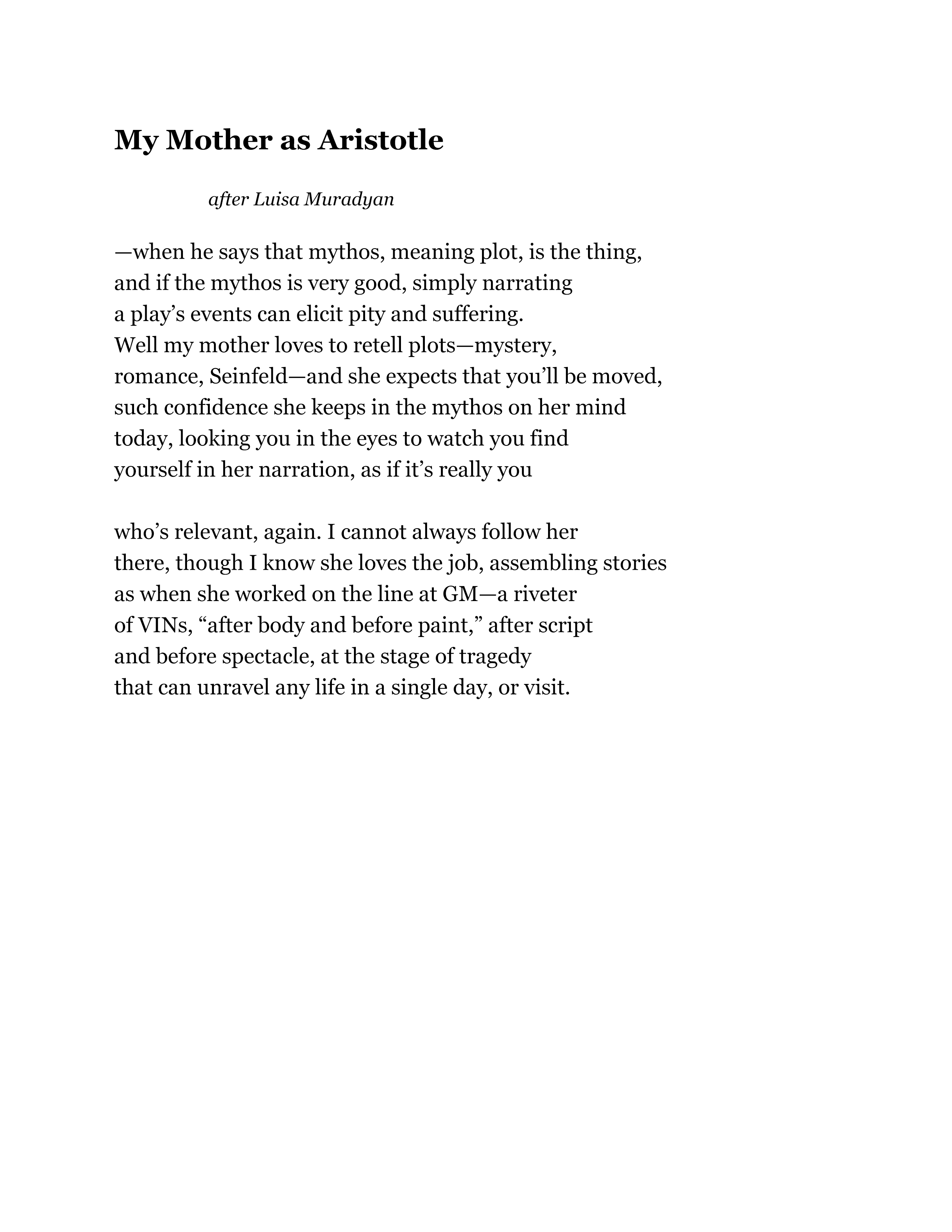
as when she worked on the line at GM — a riveter
of VINs, “after body and before paint,” after script
and before spectacle, at the stage of tragedy
that can unravel any life in a single day, or visit.
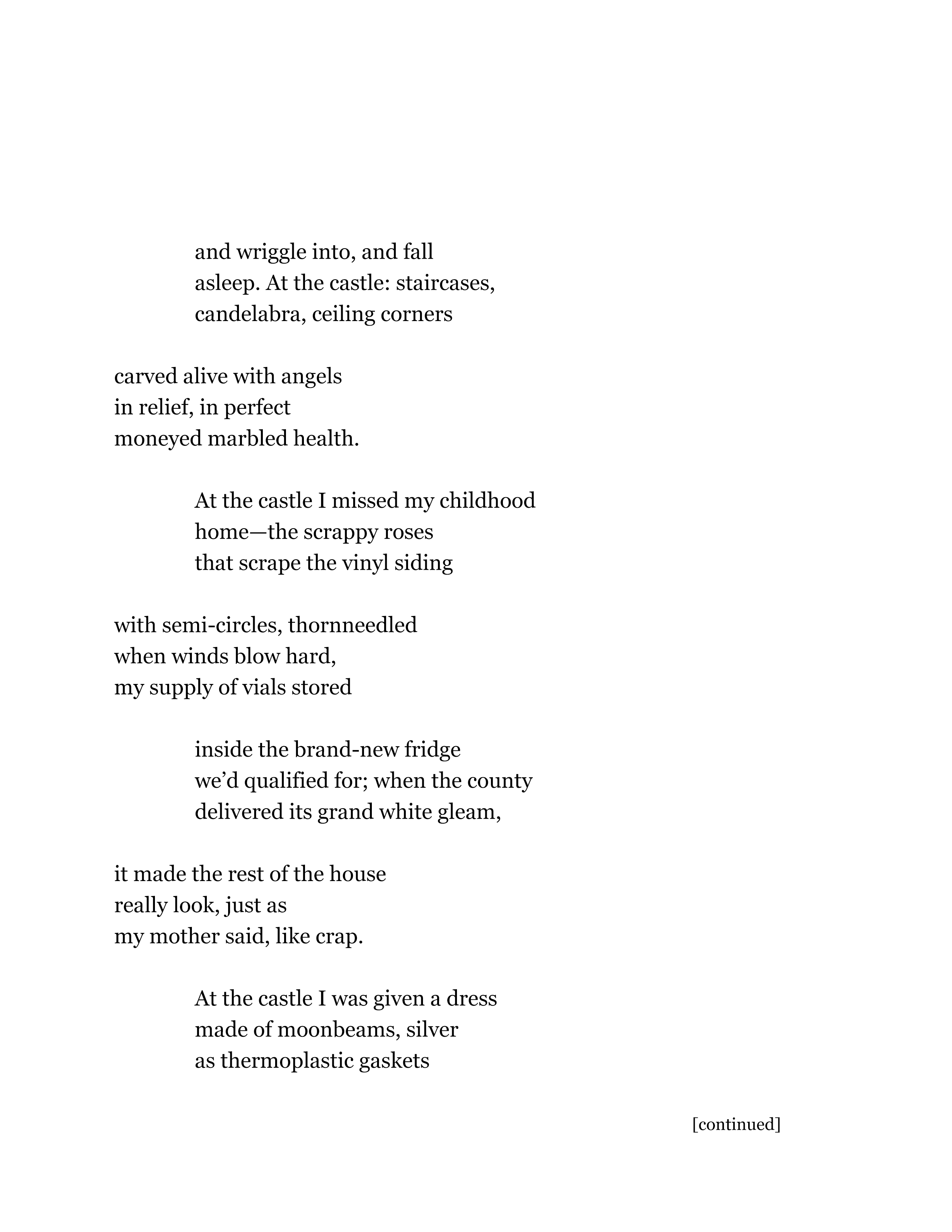
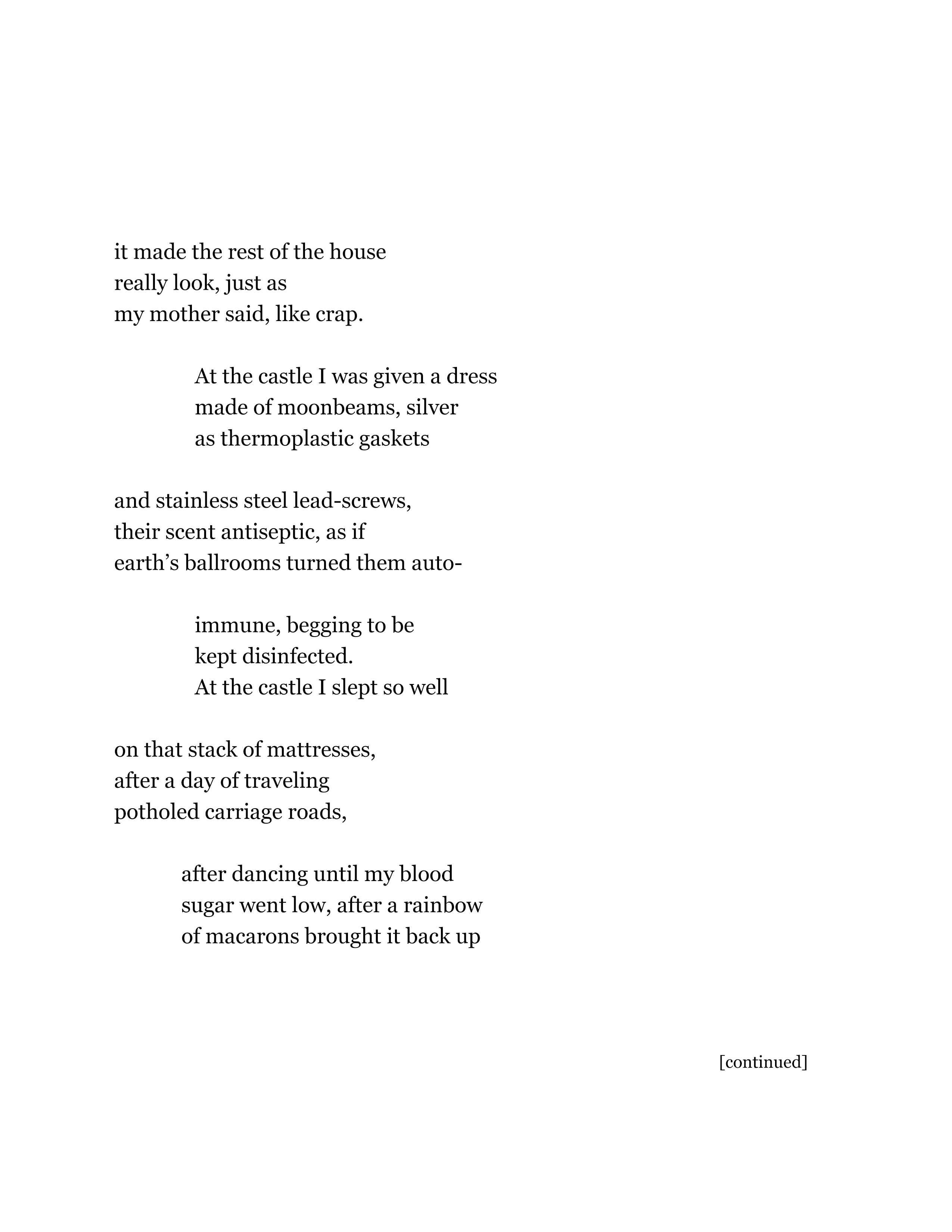
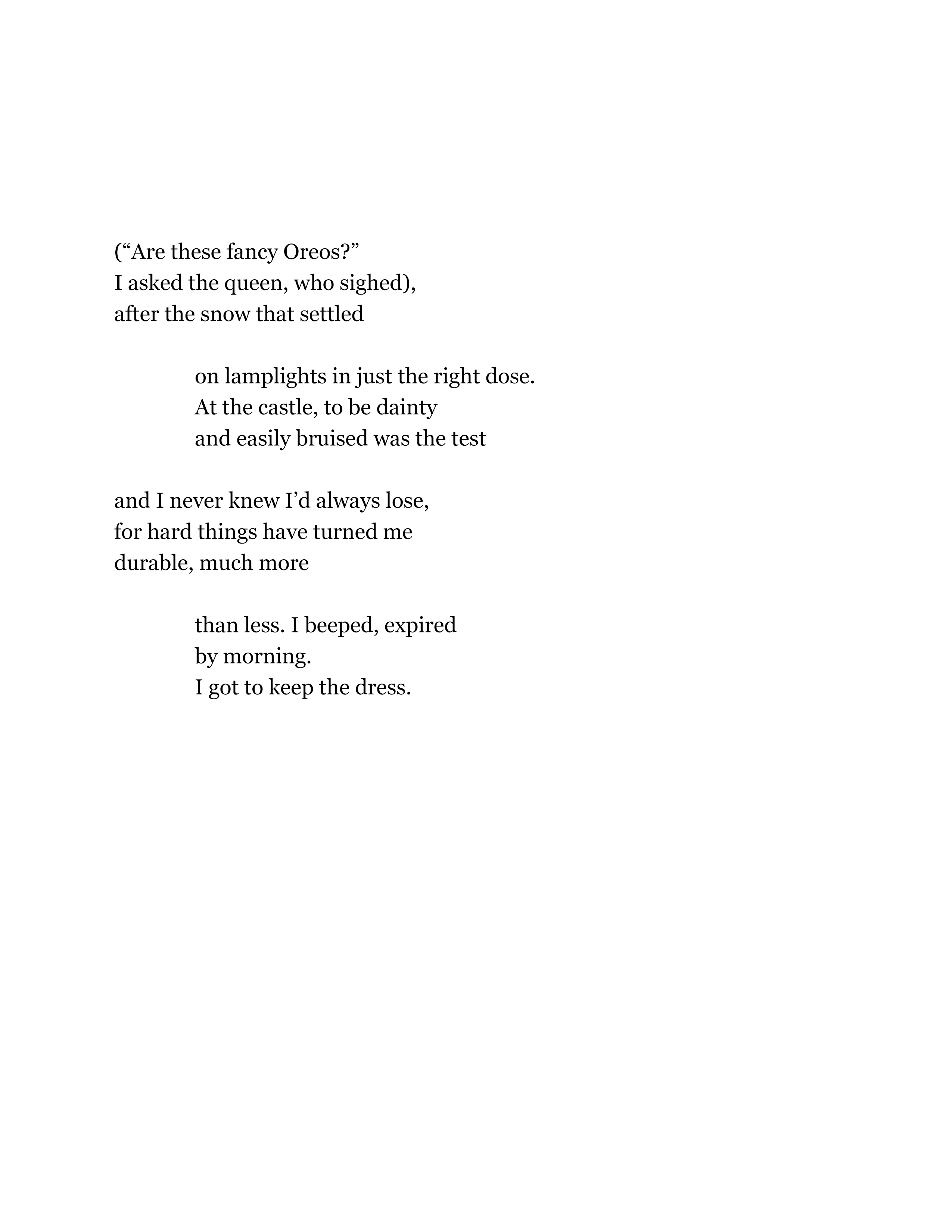
Or in the final poem of the sequence, My Insulin Pump De-Princessed Me,
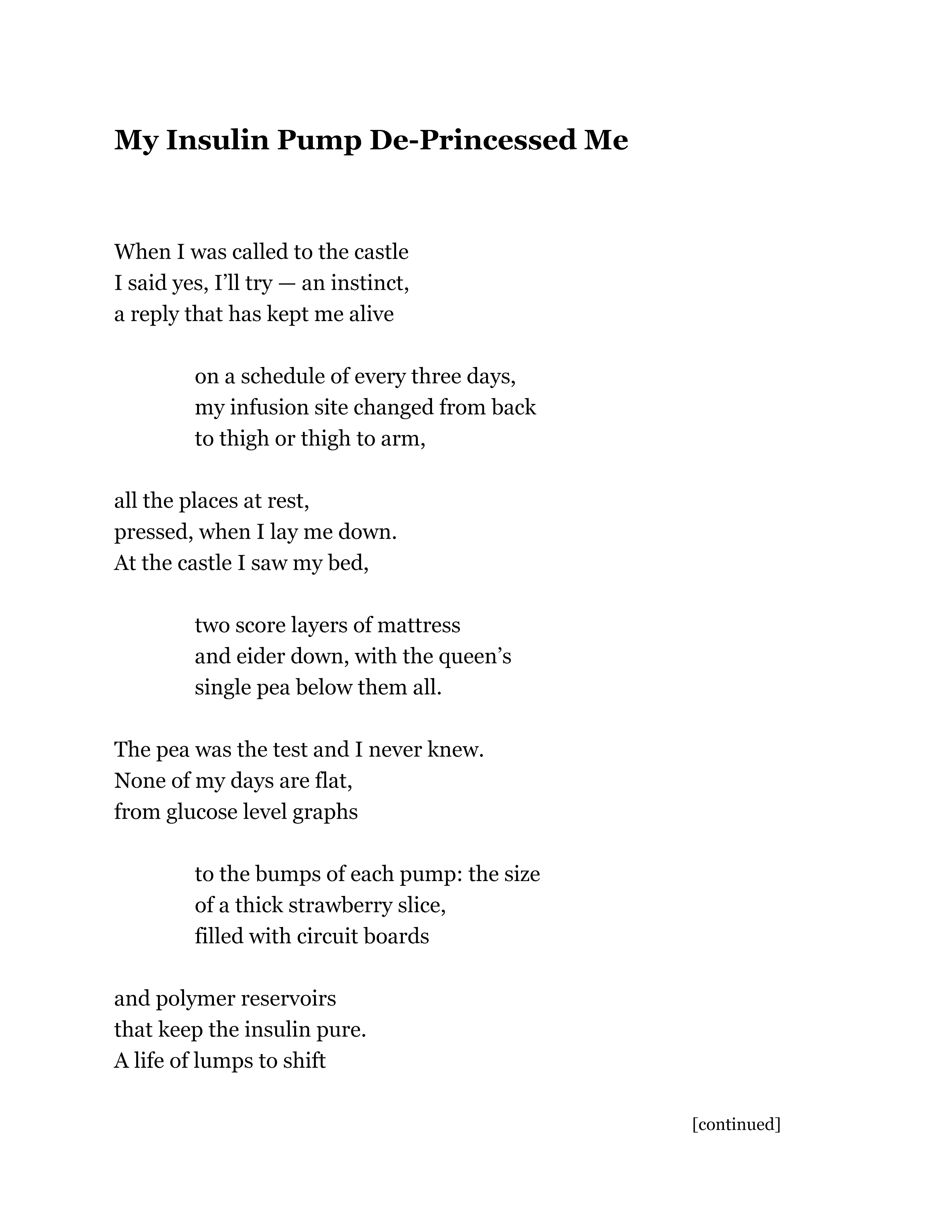
a reply that has kept me alive
on a schedule of every three days,
my infusion site changed from back
to thigh or thigh to arm,
all the places at rest,
pressed, when I lay me down.
At the castle I saw my bed
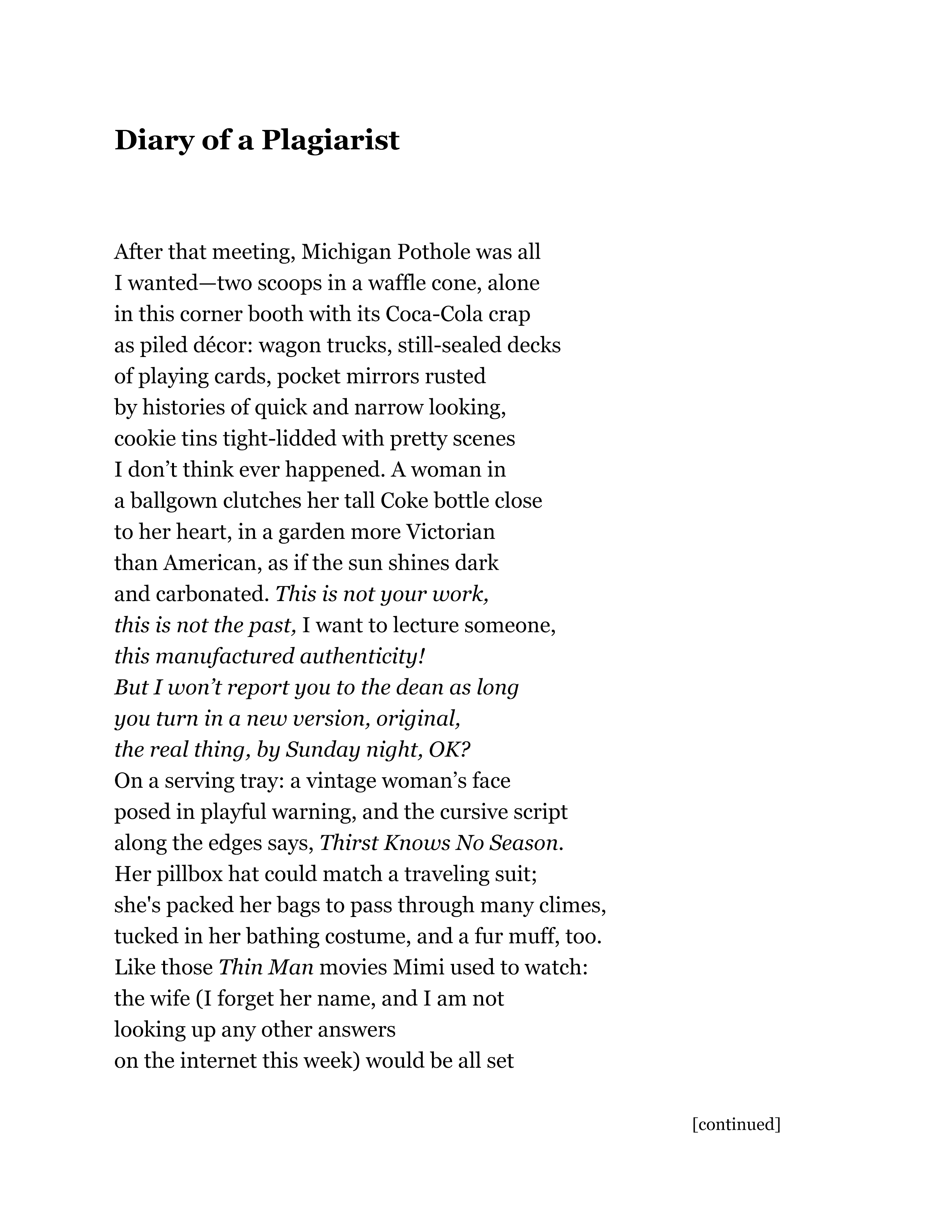
Auto plants, VIN numbers, and getting your ass kicked by life… very Detroit. Very Midwest. But while these sections in the first and third poems engage in the performance of myth, our poet does not dwell here. The second poem in the sequence, Diary of a Plagiarist, diverges. In this poem, it is not the performance of myth we see, but rather a witnessing of the poet in the act of manufacturing myth — and catching themselves. Acknowledging their own complicity in flyover-country mythmaking is a brilliant and refreshing move.
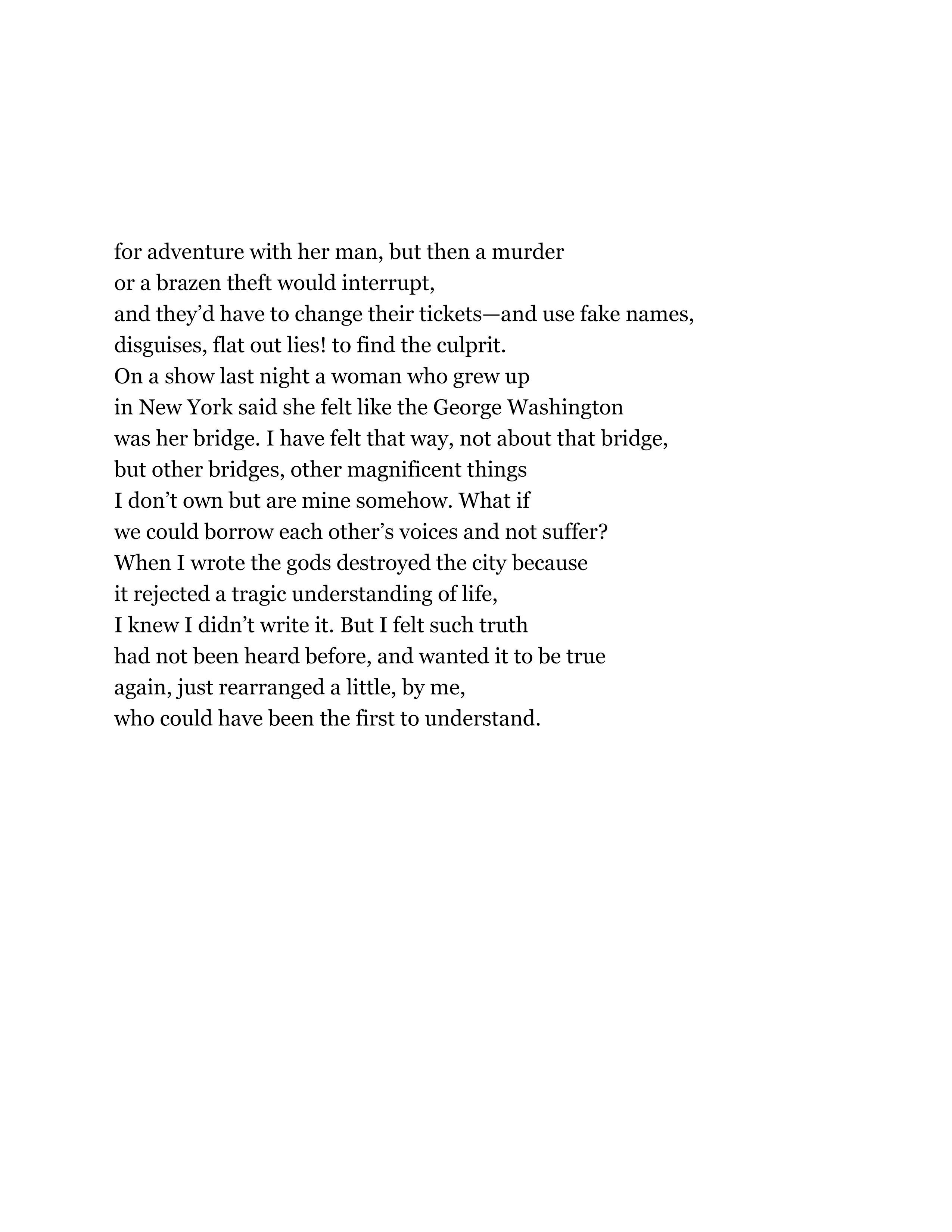
When I wrote the gods destroyed the city because
it rejected a tragic understanding of life,
I knew I didn’t write it. But I felt such truth
had not been heard before, and wanted it to be true
again, just rearranged a little, by me,
who could have been the first to understand.
And so here we are, getting served all the stuff of legend someone like me could ask for, but in a newer, more subtle way. Not the gods, monsters, and long journeys of epic scope, but something more intimate. This is myth at the scale of the body, the self. The more traditional Midwest sensibilities of safety and dignity through self-reliance are exposed for the fairy tale they often are. There is a candor here, a recognition that durability earned through hardship is possible but not guaranteed. It feels like an evolution of what so many of us love about the poetry of this region. Maybe your life’s big theophany is at the auto plant, maybe it isn’t. The poet seems to think, if nothing else, the searching might grant you its own value, gods willing.