
3 poems by Karen Holman
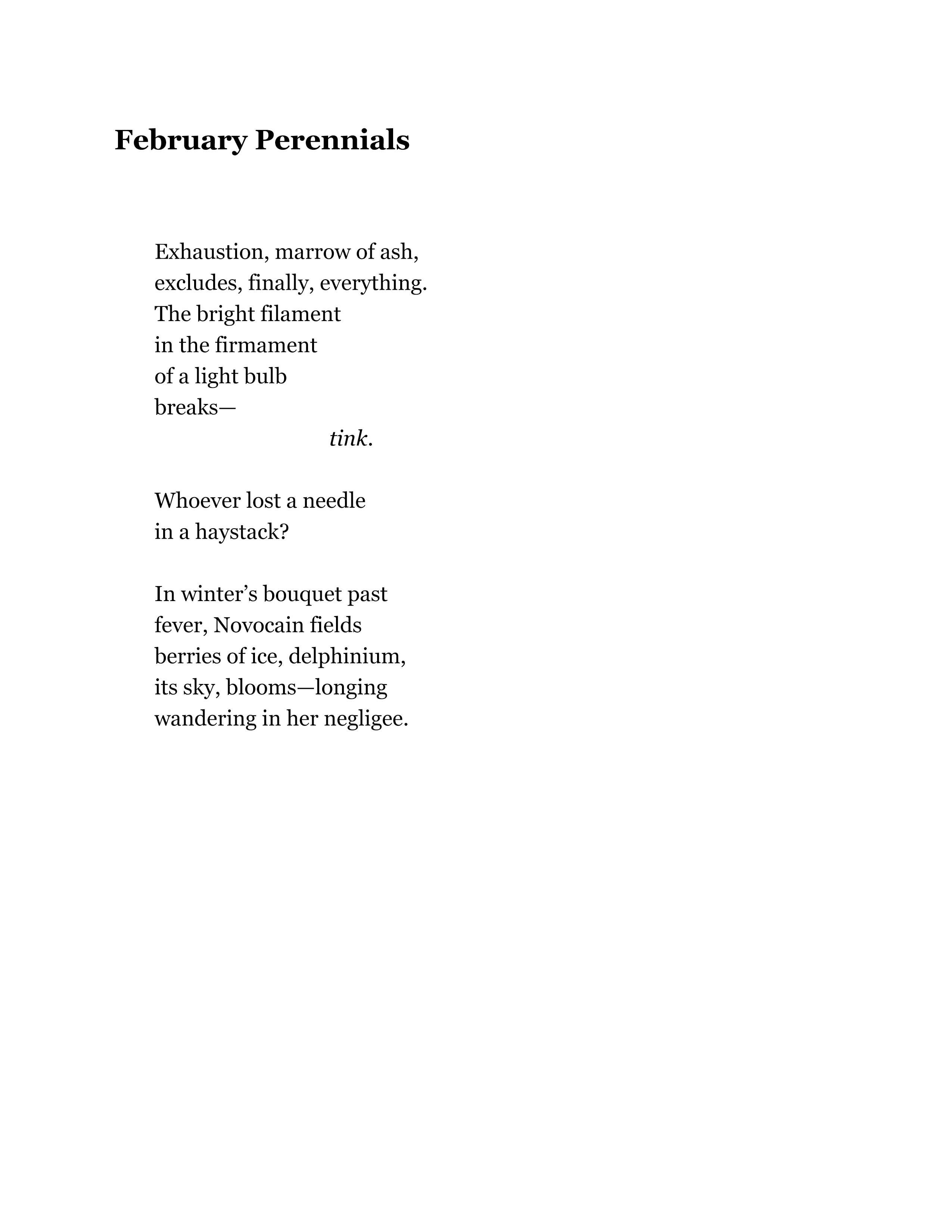
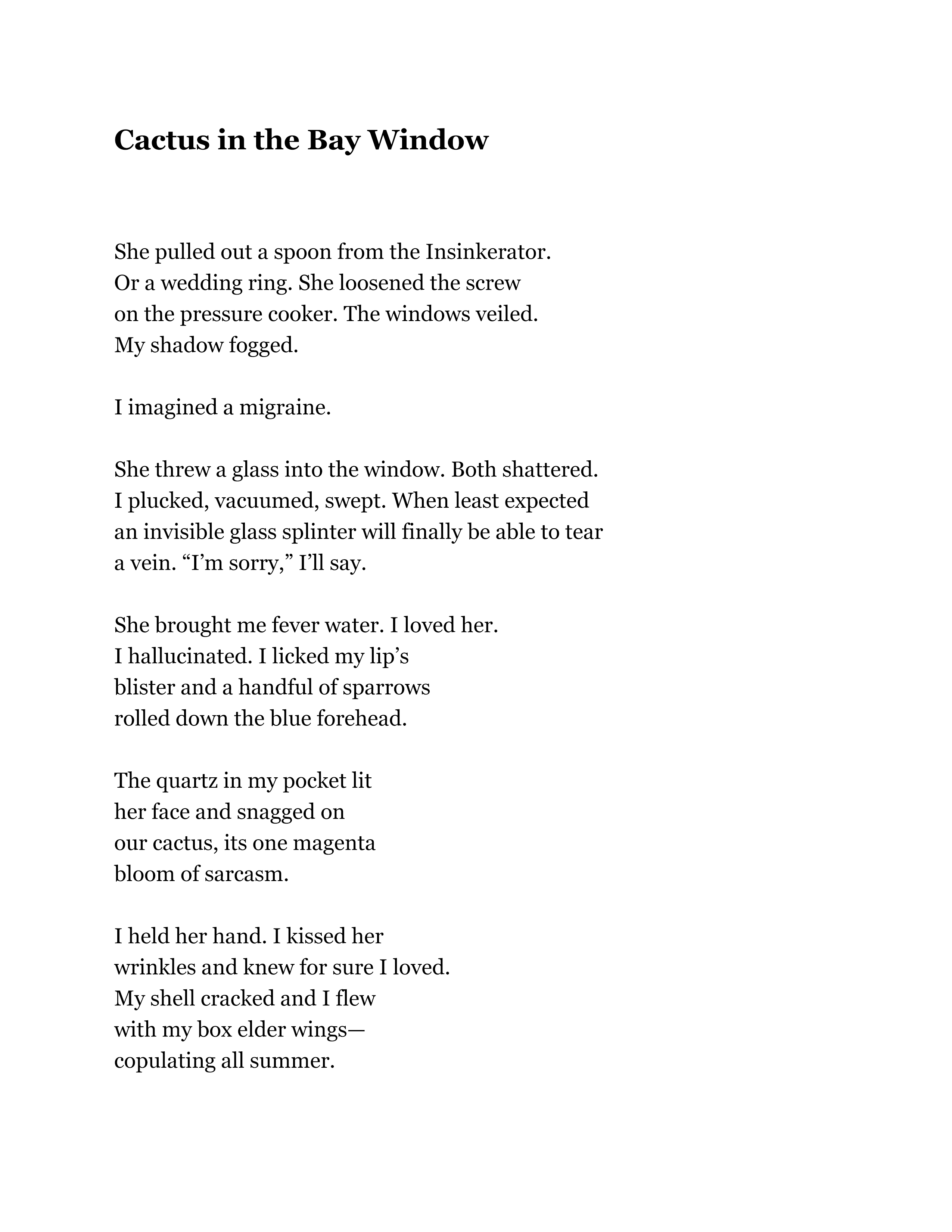
1 essay by Joseph Chapman, on the poems of Karen Holman
1.
Who are we? How do we name ourselves? I’ve been thinking about these questions ever since the arrival of our first child, Jonah. My partner and I compiled a list of names in the Notes app on our phones. We had about ten different names for boys but ultimately decided on Jonah once we saw a grainy black-and-white image try to evade the sonographer at his first ultrasound. Then, he had the anterior placenta ripped from over his head—much like the shade of the castor oil plant that is taken away from the biblical Jonah—after he was rushed out of the womb in a C-section. Jonah, running away, upset, and without God’s gracious shade.
2.
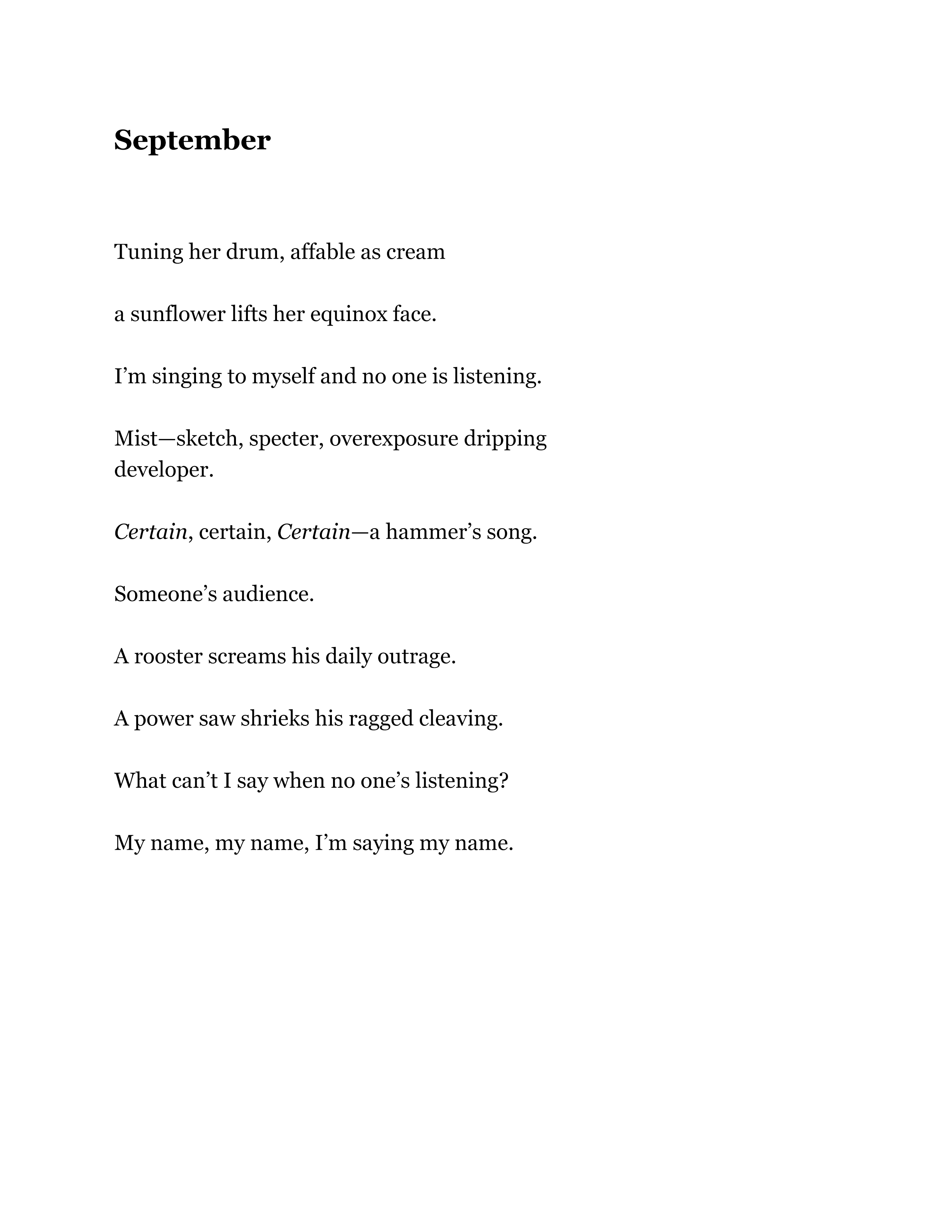
“September is also concerned with names and naming. There’s the plaintive last line, “My name, my name, I’m saying my name,” but all throughout there is this insistence on being named and being heard. Of having the sunlight of attention bestowed on the self: “Turning her drum, affable as cream, / a sunflower lifts her equinox face.” This is the visual opening to the poem, but the aural opening is the third line: “I’m singing to myself and no one is listening.” Who will hear the speaker? Who will hear her name? Can she even say her name when no one is listening?
3.
No one is listening, and so the speaker waits and waits: “Mist—sketch, specter, overexposure, dripping / developer.” The speaker waits so long that the self drips, is overexposed, like celluloid in a dark room. Who will hear her into being? There’s an underlying melody, an accompaniment to the speaker’s naming of herself. “Certain, certain, Certain—a hammer’s song.” Unlike the certainty of the hammer, the speaker’s name is unsure, diaphanous. The sound of the hammer is Certain but the speaker’s name is not. And how can it be when no one is listening? Someone is or has an audience but it’s not the speaker, which might be what leads to the rooster’s outrage: daily he repeats his frustration. Then the power saw shrieks, leading to the speaker’s impassioned insight: “What can’t I say when no one’s listening? / My name, my name, I’m saying my name.”
4.
It’s here the poem fractures into brilliant shards. I think of Gerard Manley Hopkins and his insistence that each thing knows, names, and speaks itself: “Each mortal thing does one thing and the same: / Deals out that being indoors each one dwells; / Selves — goes itself; myself it speaks and spells, / Crying Whát I dó is me: for that I came.” The just man justices, the power saw saws, the speaker names herself. But this is exactly what the speaker cannot say. She cannot say her name because no one is listening. Revising Hopkins, the speaker realizes that a name only happens when you are heard and/or seen. You cannot be named in isolation or silence. You are only named when like a sunflower you lift your face to the attentive sun.
5.
In this sense, the speaker is more attuned to Lacan than Hopkins. There is no way to say her name because the leap from signified to signifier, from self to name, is too far. It can never be done, even though she says it over and over: “My name, my name, I’m saying my name.” We never hear it in the poem. We never hear what the name is, even though there is a chorus of voices: the self singing, the hammer ringing, the outraged rooster, the power saw shrieking. But no one is listening and the signified cannot find its signifier—not even through our attentive listening.