
3 poems by Karen Finneyfrock
1 essay by Lauren Camp, on the poems of Karen Finneyfrock
These three poems move through time and/or space in significant ways. The author isn’t tied to one approach.
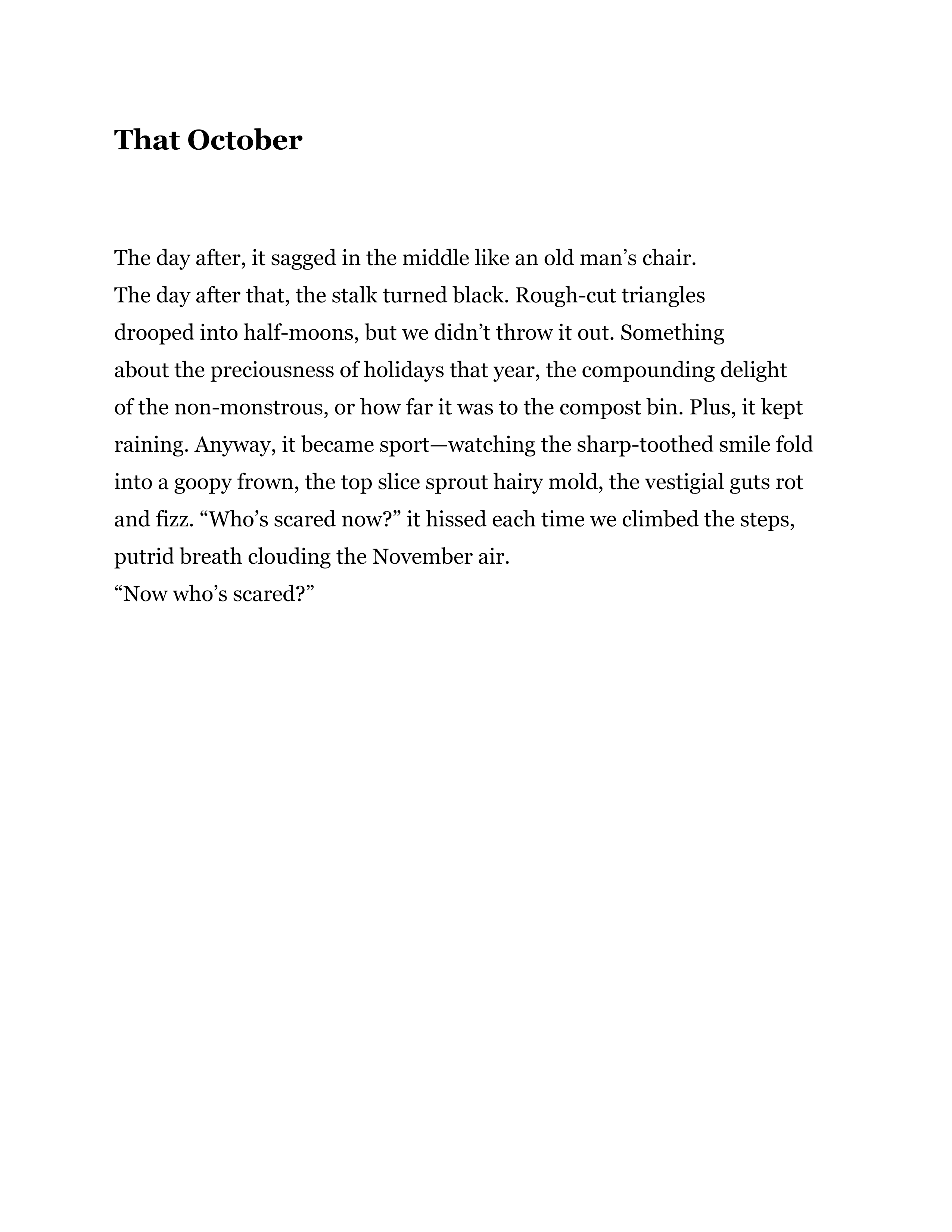
“That October” begins in the middle of a situation—the late middle. “The day” was somehow significant, we know that, though we don’t get to know what happened. “It sagged,” the poet writes. What is the “it,” a reader wonders. We go along, line by line as time moves in its big and small ways. In days and lack of efforts. And when aren’t holidays precious? So, this year was special– but why? We won’t get to know. Weather makes its big appearance too. “It kept raining.” Honestly, who would want to do any hard work in that?
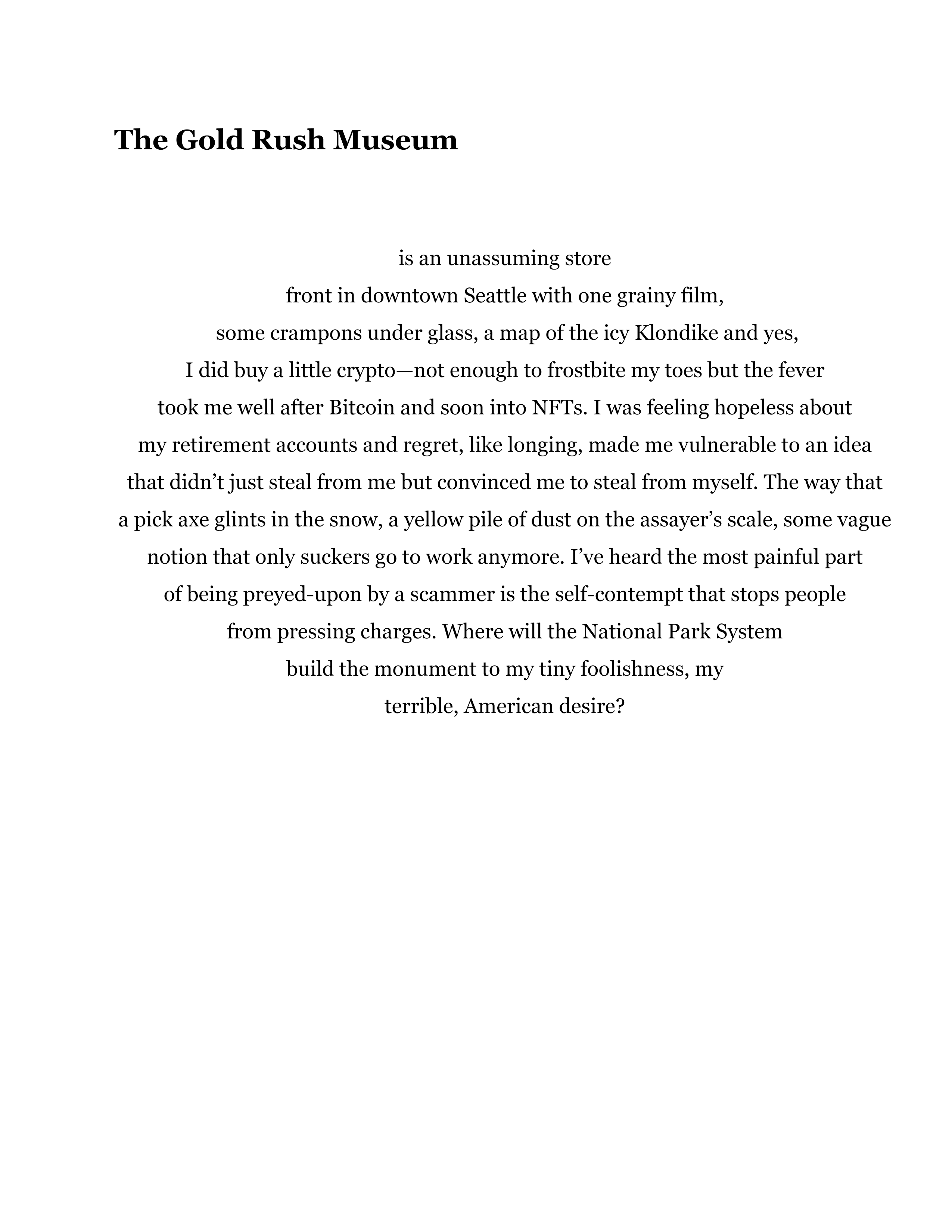
The way “The Gold Rush Museum” balloons in the middle is the way addiction or impulse works. A little of a substance or behavior might be fine, but energy grows. The poem moves from a small into an extreme desire for gain that then “made me vulnerable” to a wider greed. So much temptation, so hard to turn away from.
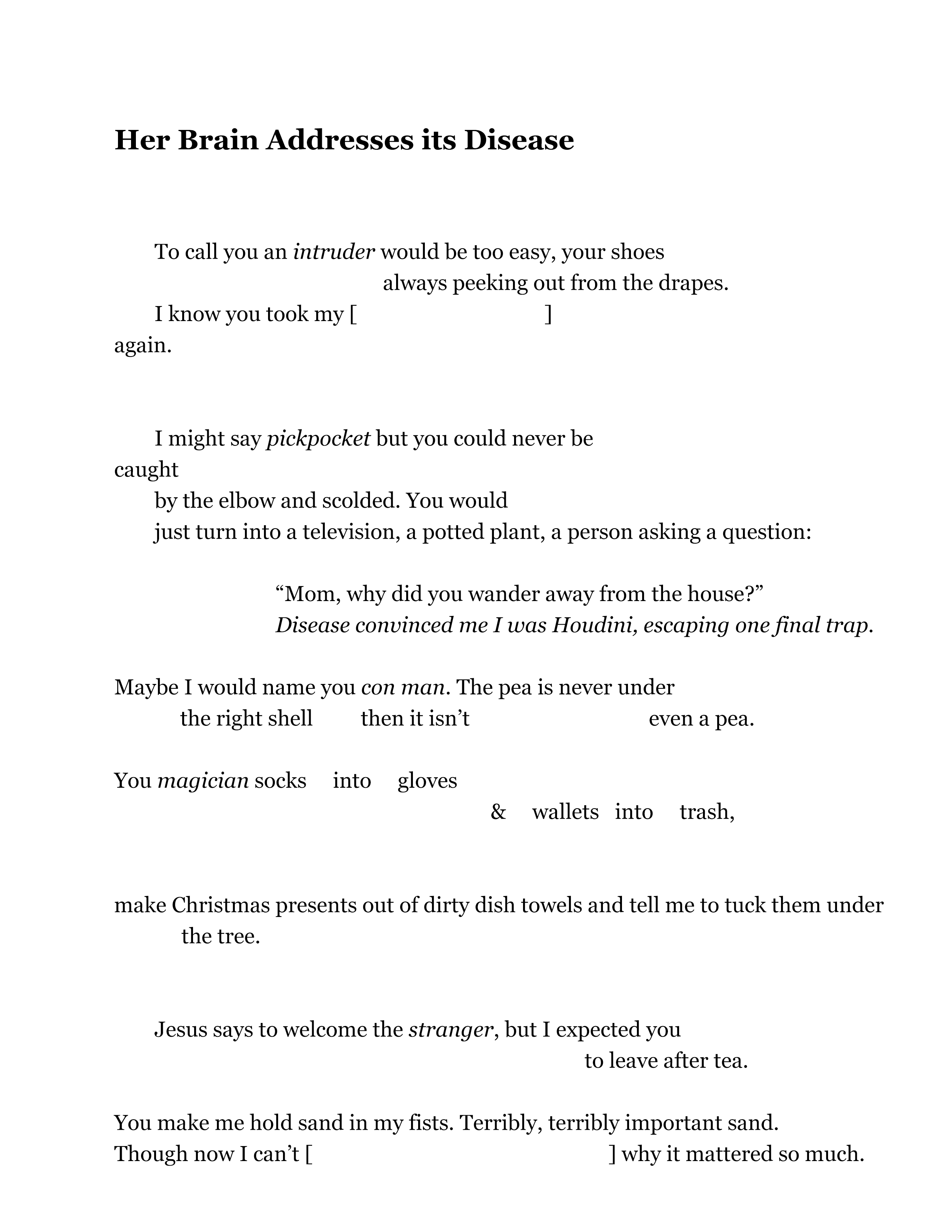
I’m so entranced by the absences, the bracketed space in “Her Brain Addresses its Disease.” They allow me to fill in what I think is meant there, and then to question my understanding, reshifting and considering as I move through the poem. When I look down the poem at the italics (intruder, pickpocket, magician, stranger—and the line in the middle that names the master Houdini), I know the speaker is outmaneuvered. Here’s a subject with skill, with experience. And the title does a lot of work, setting up the landscape of illness right from the start. We don’t know if this is a physical disease like cancer, or mental illness, or memory loss. Any one of these can enter as a stranger and demand something unexpected. “The pea is never under / the right shell then it isn’t even a pea.” So slippery, this unnamed disease. How does one manage to collaborate with it or ignore it? The detail of holding sand in the fists… I can’t stop hearing it. No matter how diligently you intend to hold it, the sand will slip through. And the sand itself (“terribly, terribly important”)…but when are any grains of sand important? They aren’t of individual value; they are weighed en masse. At a beach, for example, one grain of sand within that is no different from another, right? Is what’s in the brackets essential or small? Do the brackets hold an inevitability of the disease? This poem devastates, making meaning of absence. The bracket acts as a suture, a place of pretending whatever is in there could make a person whole and well.
Mary Ruefle says, “I prefer to wonder than to know,” and these poems demonstrate this well. By the time I get to the end of each of these poems, I have a new knowledge—or maybe a new investment in the mystery the poem holds.