
3 poems by Jeff Kass
1 essay by Mary Buchinger, on the poems of Jeff Kass
What Looks Like Disaster
In Elizabeth Bishop’s villanelle, “One Art,” the speaker asserts that “[t]he art of losing isn’t hard to master;/so many things seem filled with the intent/to be lost that their loss is no disaster” and then continues with a list of losses that certainly feel disastrous— her mother’s watch, three loved houses, a river, a continent, and finally, her beloved— and the speaker struggles to convince herself, “the art of losing’s not too hard to master/though it may look like (Write it!) like disaster.” Likewise, the set of poems under consideration here expresses a kind of reckoning with losses, a measuring of disaster.
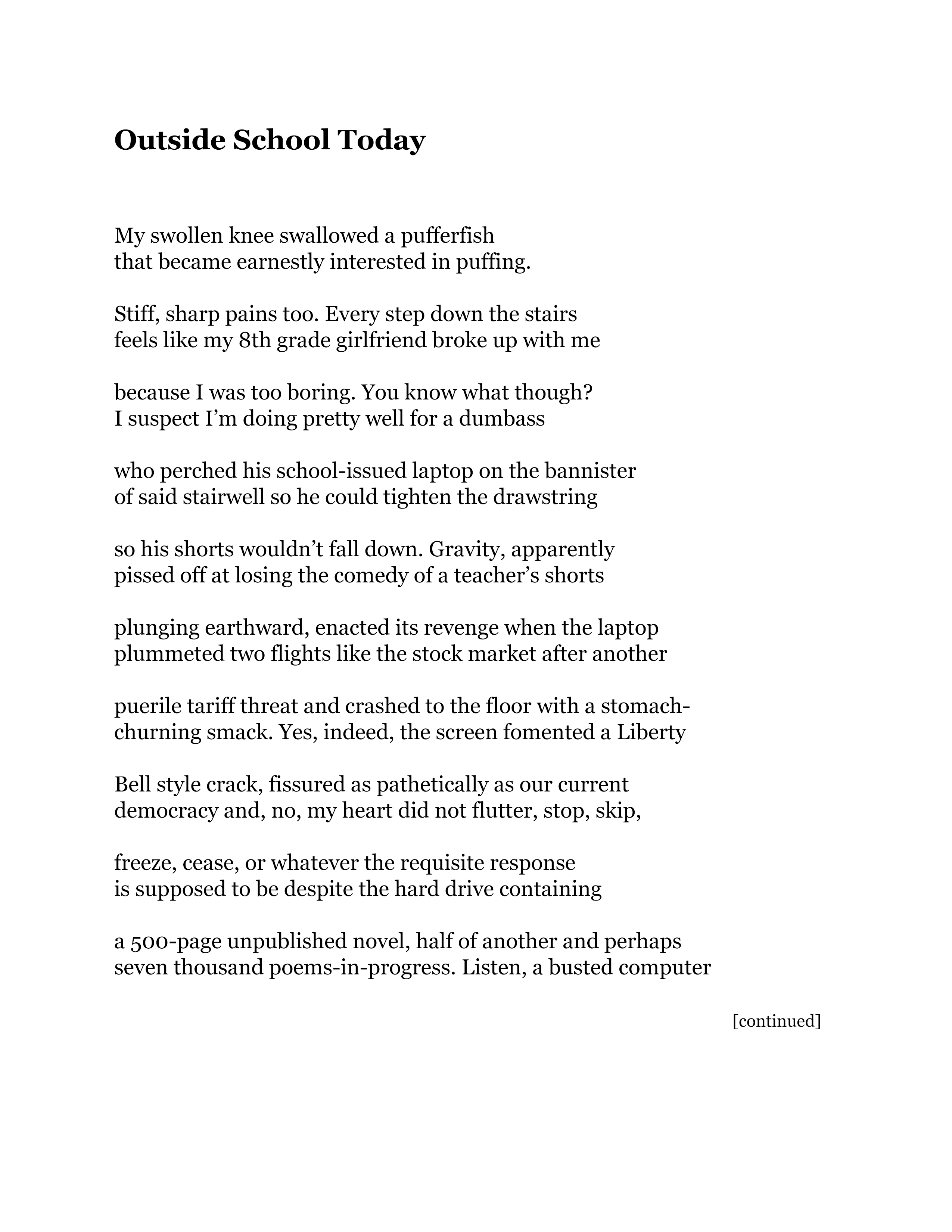
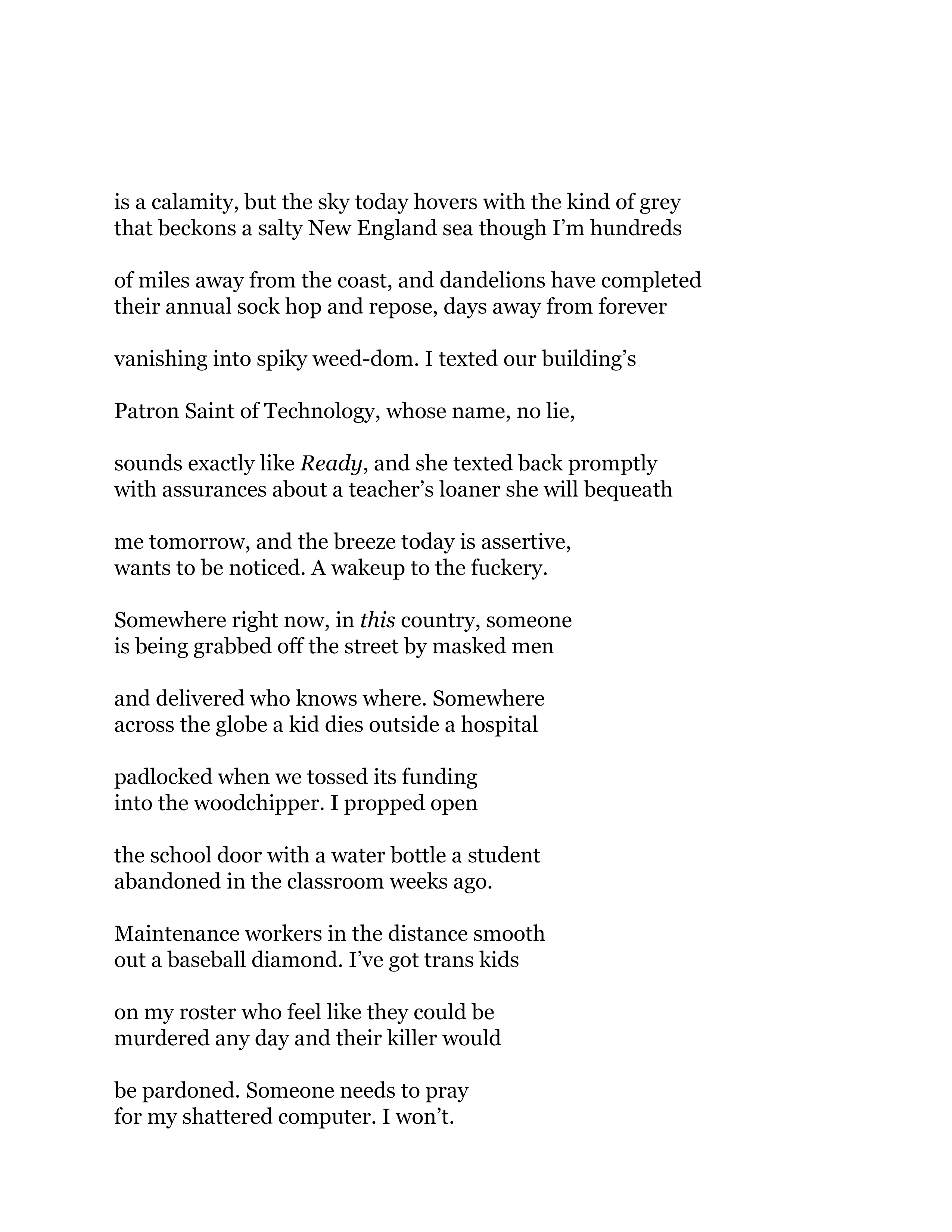
In the poem, “Outside School Today,” the speaker catalogs personal losses and assesses them in relation to the losses others experience. The meaning of loss, and the experience of it, is tempered by the knowledge of what others face. Yet the speaker’s losses are real! A five-hundred page unfinished novel, and half of another, thousands of poems, lost on a computer that “plummeted two flights” of stairs and landed with a “stomach-churning smack” –the kind of loss every writer dreads! In light of ICE kidnappings, suboptimal healthcare, and the threats his trans students face, the speaker regards the loss of creative work to be relatively minimal: “Someone needs to pray for my shattered computer. I won’t.” The speaker’s assessment of personal disaster is shaped through comparison to the circumstances of others.
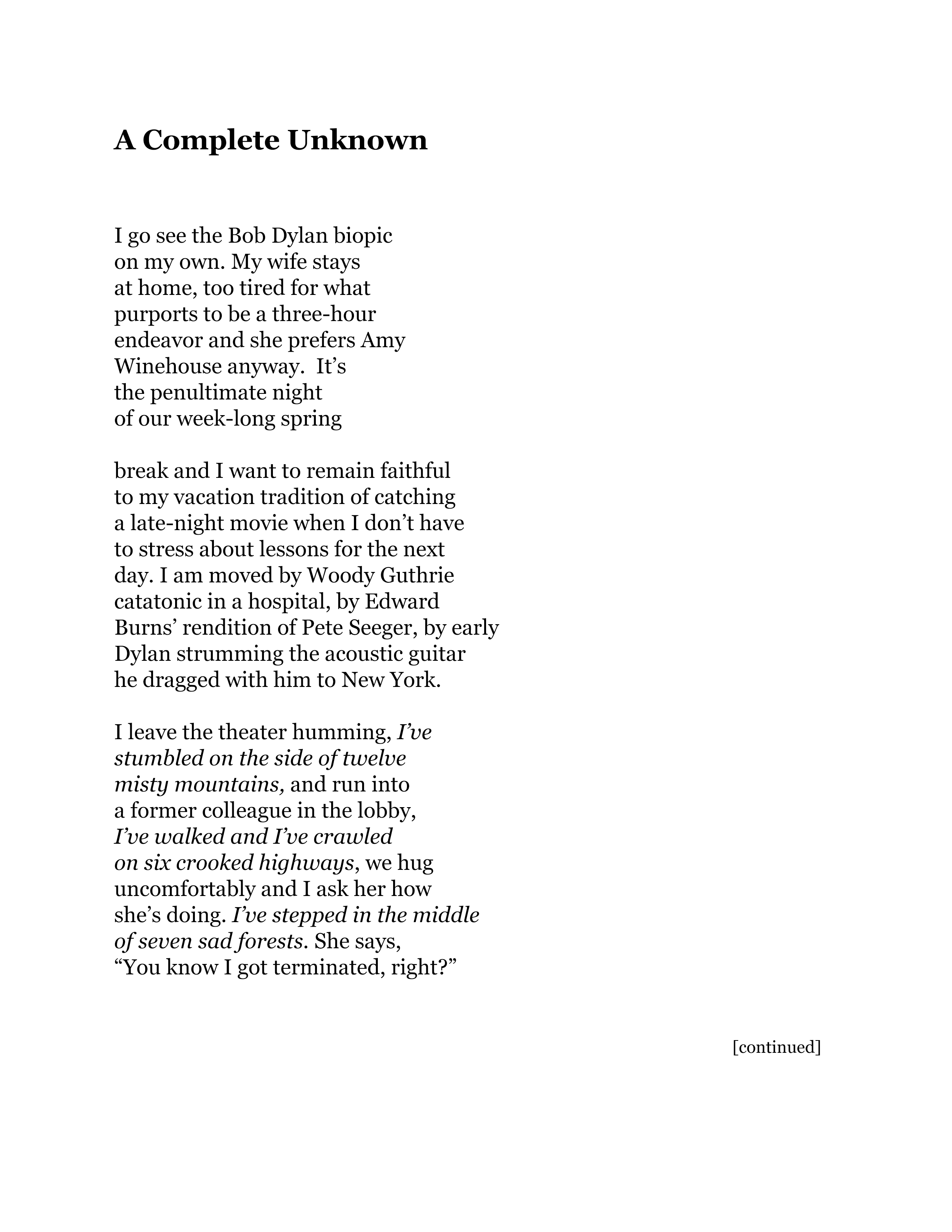
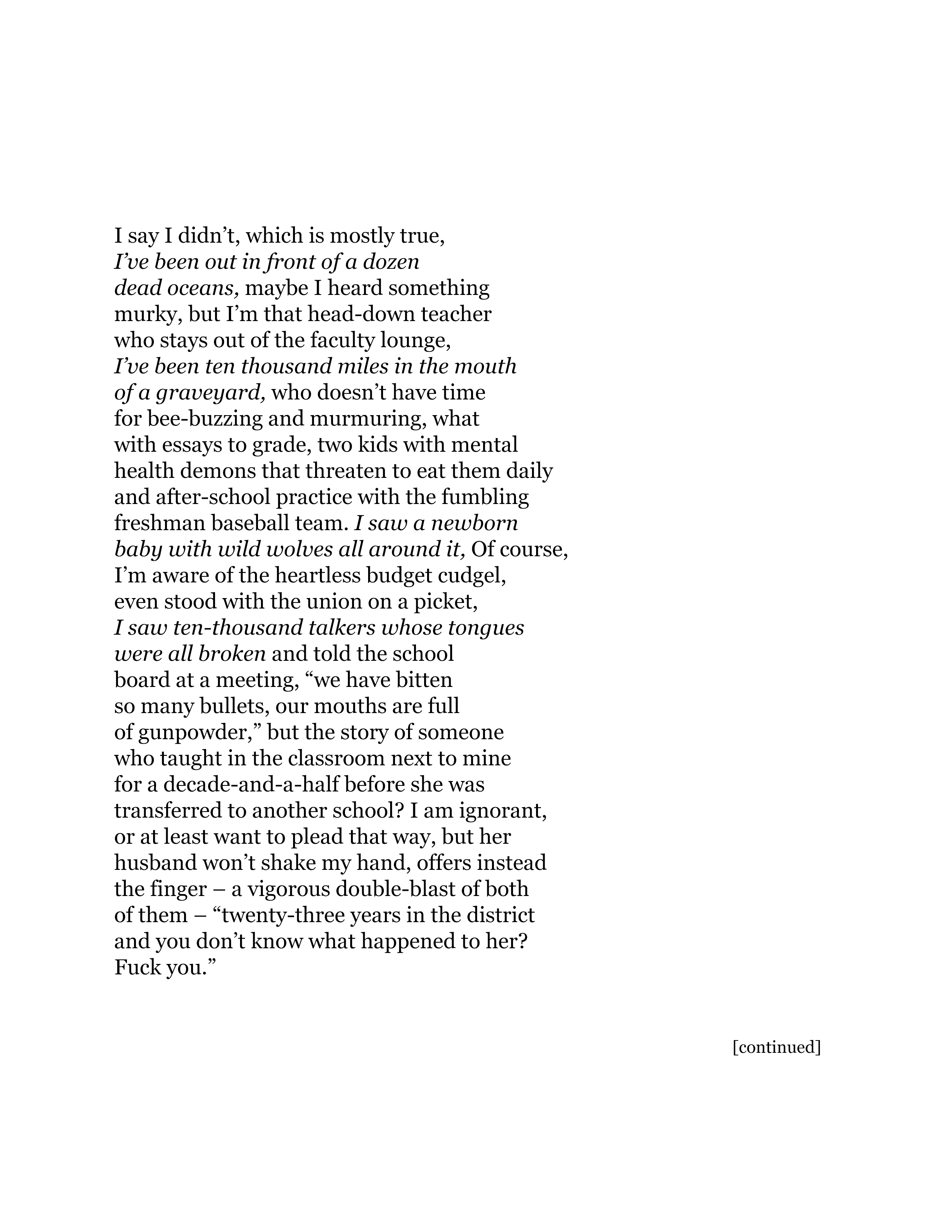
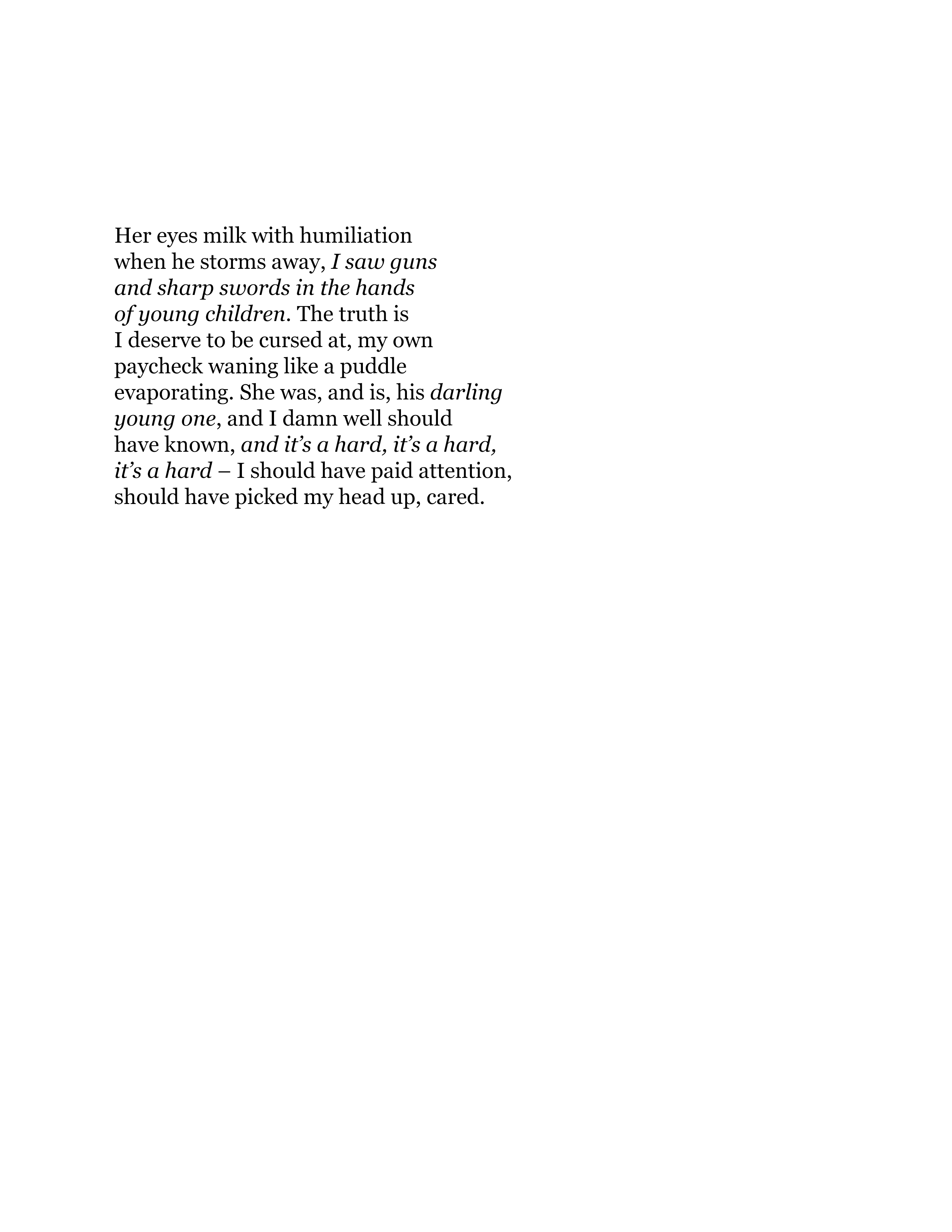
“A Complete Unknown” weaves Bob Dylan lyrics into a narrative of loss. The speaker runs into a former colleague at the movie theater. We learn that the colleague’s position was cut after many years of teaching in the district. The colleague’s husband directs his fury at the speaker for not knowing and seemingly not caring about her job loss. Once again, in this telling, the speaker responds with self-recrimination and empathy.
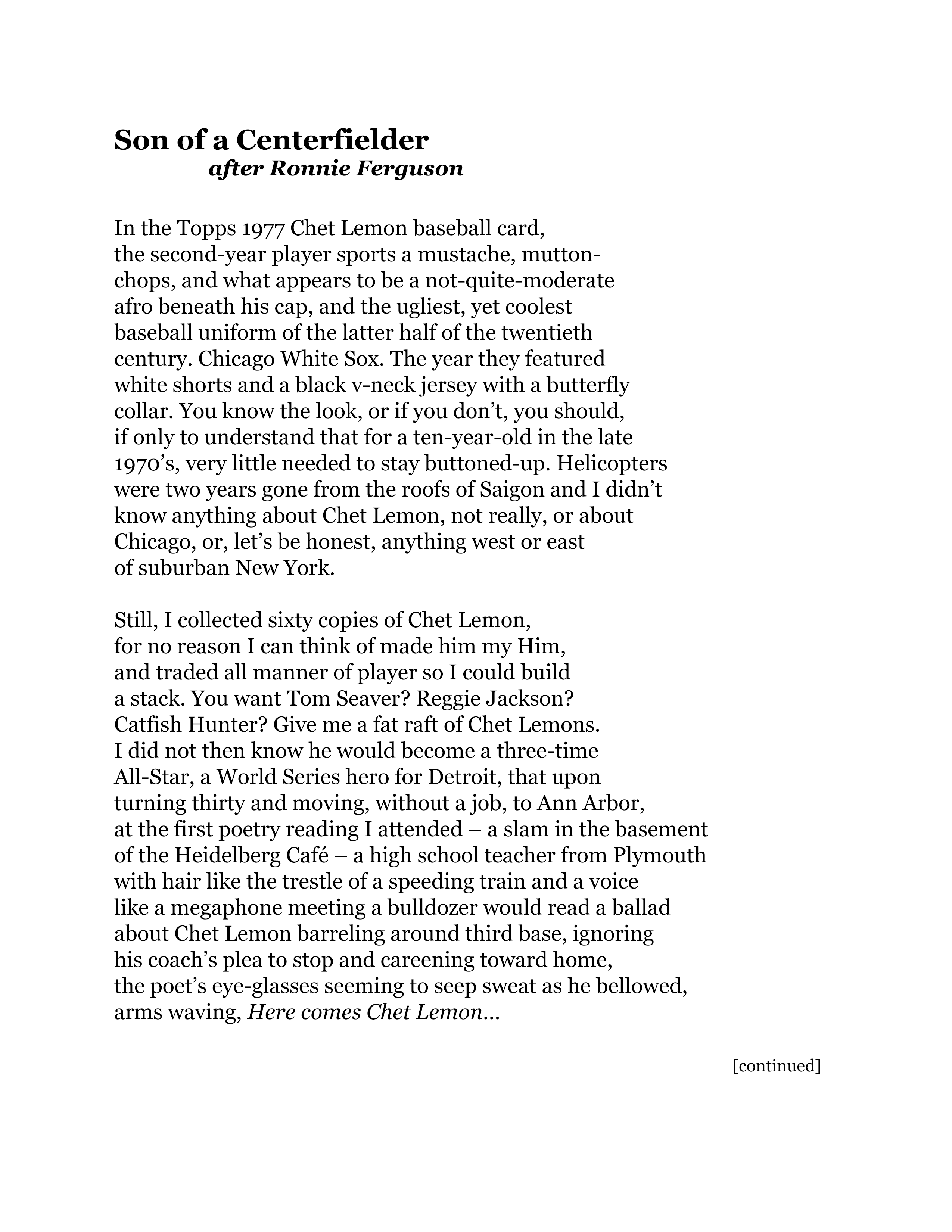
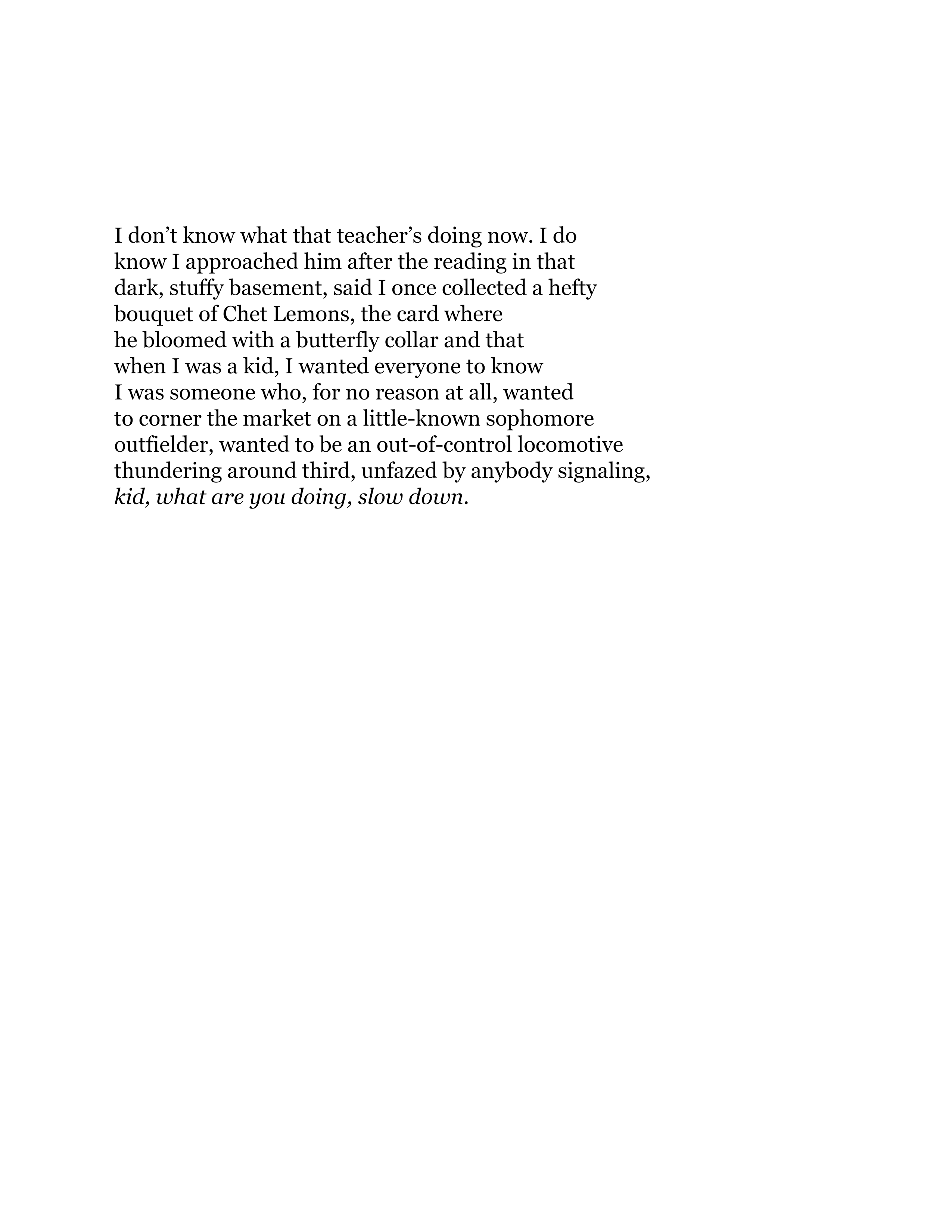
The final poem, “Son of a Centerfielder,” is steeped in nostalgia, which is inherently an enterprise of loss. The speaker describes how when he was young, he voraciously collected baseball cards featuring Chet Lemon, “for no reason I can think of made him my Him” and then, at thirty, unemployed, attending a poetry reading in Ann Arbor where he’d just moved, found himself listening to another poet’s ballad about Chet Lemon and he recalls his own “hefty bouquet” of baseball cards. The poet contextualizes the collecting of the cards within the larger milieu of the 1970s—the fall of Saigon, the time of leisure suits, open collars— as well as within the personal frame of a young boy’s hope for an outsize future.
These poems reflect on the losses of youth, of strength, of dignity, of creative efforts, and seek perspective within a larger social and global context. Within these concentric rings of loss and tragedy, this reader finds herself asking, What is it, really, this thing we call disaster?