
5 poems by Jay Griffith
1 essay by Sarah Carson, on the poems of Jay Griffith
All the Small Things
There are certain pieces of writing that feel less like something you read and more like something that reads you—that reach into the quiet, unexamined corners of your inner life and name what you didn't know was there. This packet of poems did exactly that for me. Written in an intimate, stream-of-consciousness style, these poems are built from the stuff of ordinary life: a torn bag of chips, a lightning bug on a laundry room door, a baby tree pushing out new leaves against a brick wall. And yet in accumulating these small, specific details, they manage to say something enormous about grief, loneliness, and the stubborn persistence of beauty in a world that doesn't always make room for it.
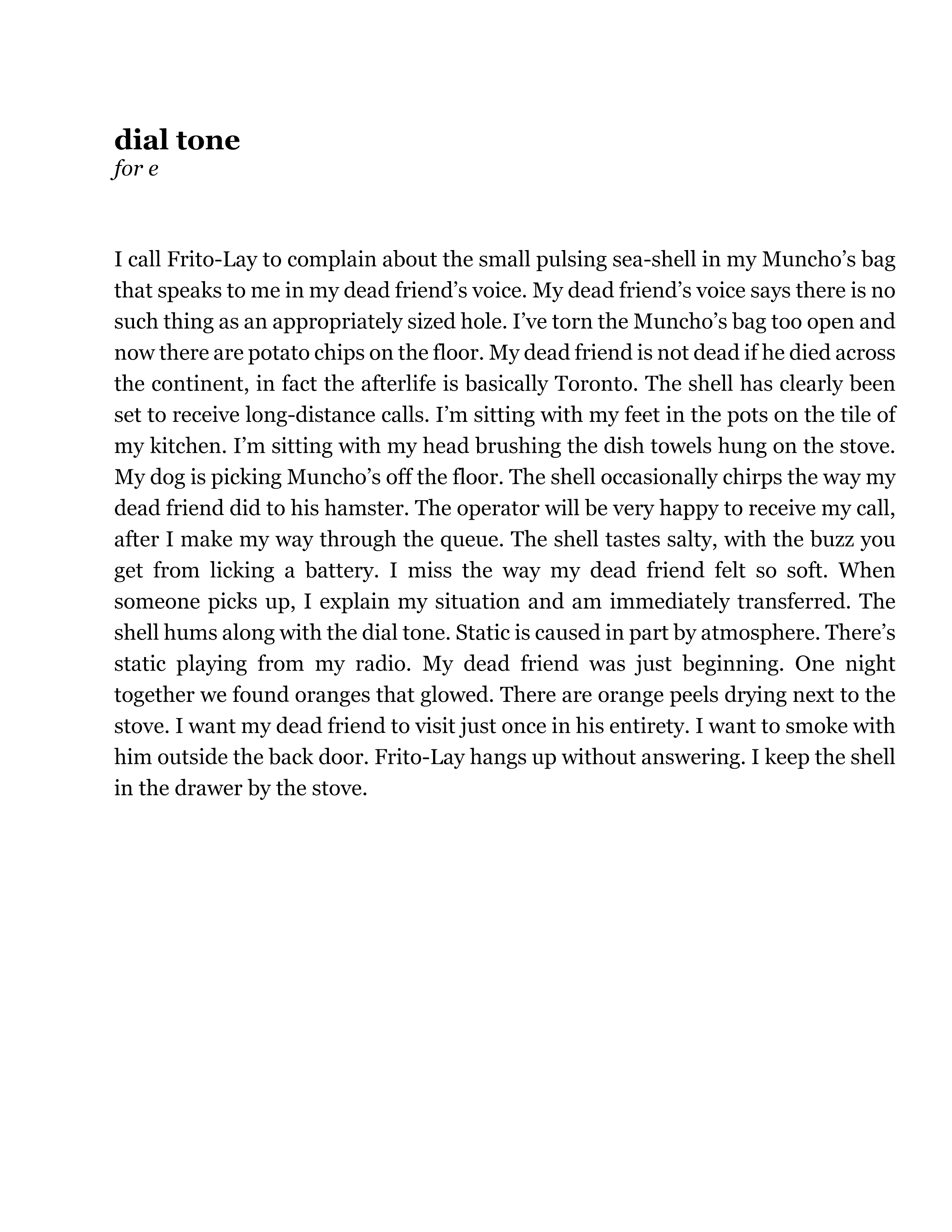
The first poem in the packet, "dial tone," is the one that stayed with me longest. It follows a speaker who calls Frito-Lay to complain about a sea-shell in their snack bag that speaks in the voice of a dead friend. On the surface this is absurd, and the poem knows it. But underneath the humor is a grief so raw and specific it's almost hard to look at directly. The detail that undid me was this: "I want my dead friend to visit just once in his entirety." Not in dreams, not in signs, not in shells inside chip bags—just wholly, fully, in person. It's the kind of wish that grief makes you feel and that most of us are too embarrassed to say out loud. Reading it felt like being given permission to want impossible things.
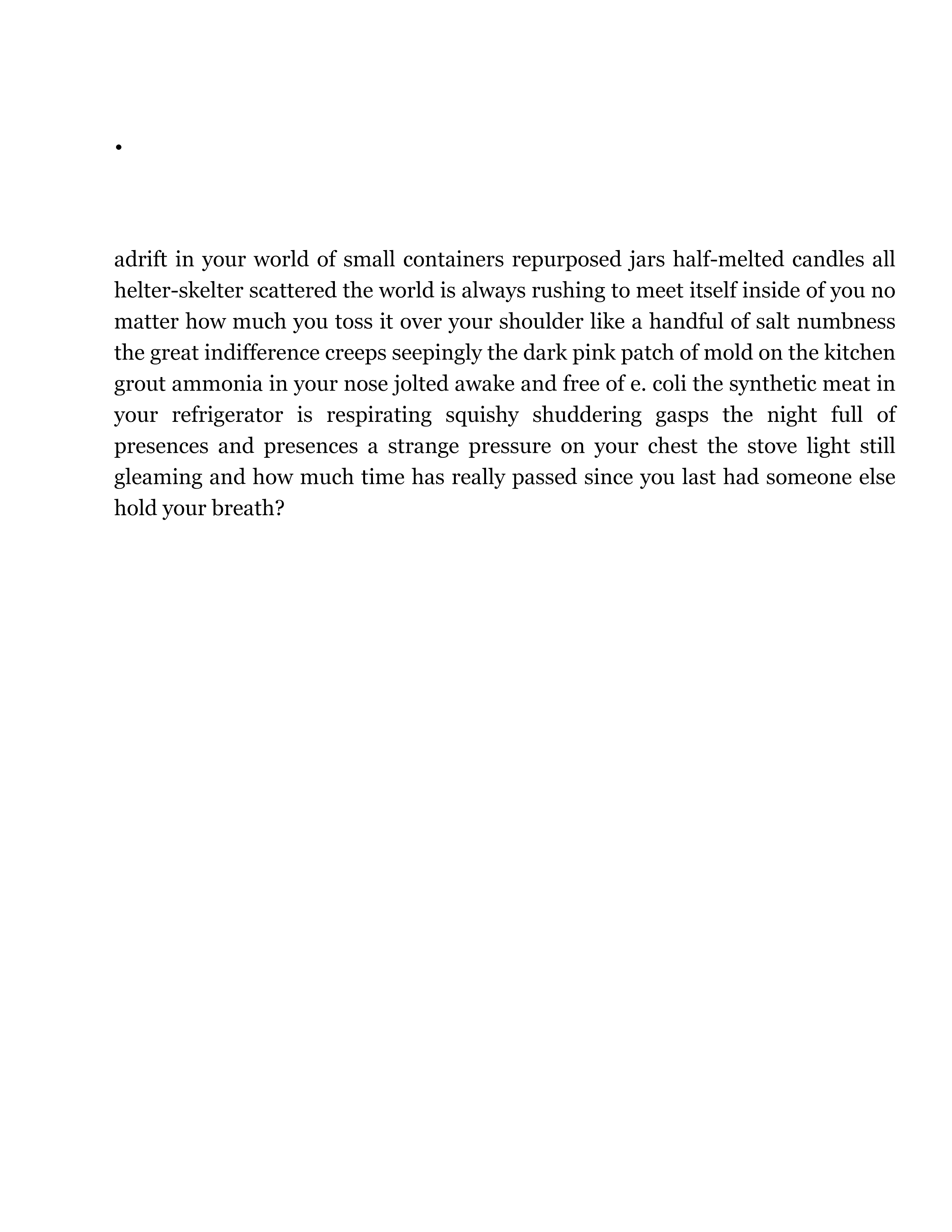
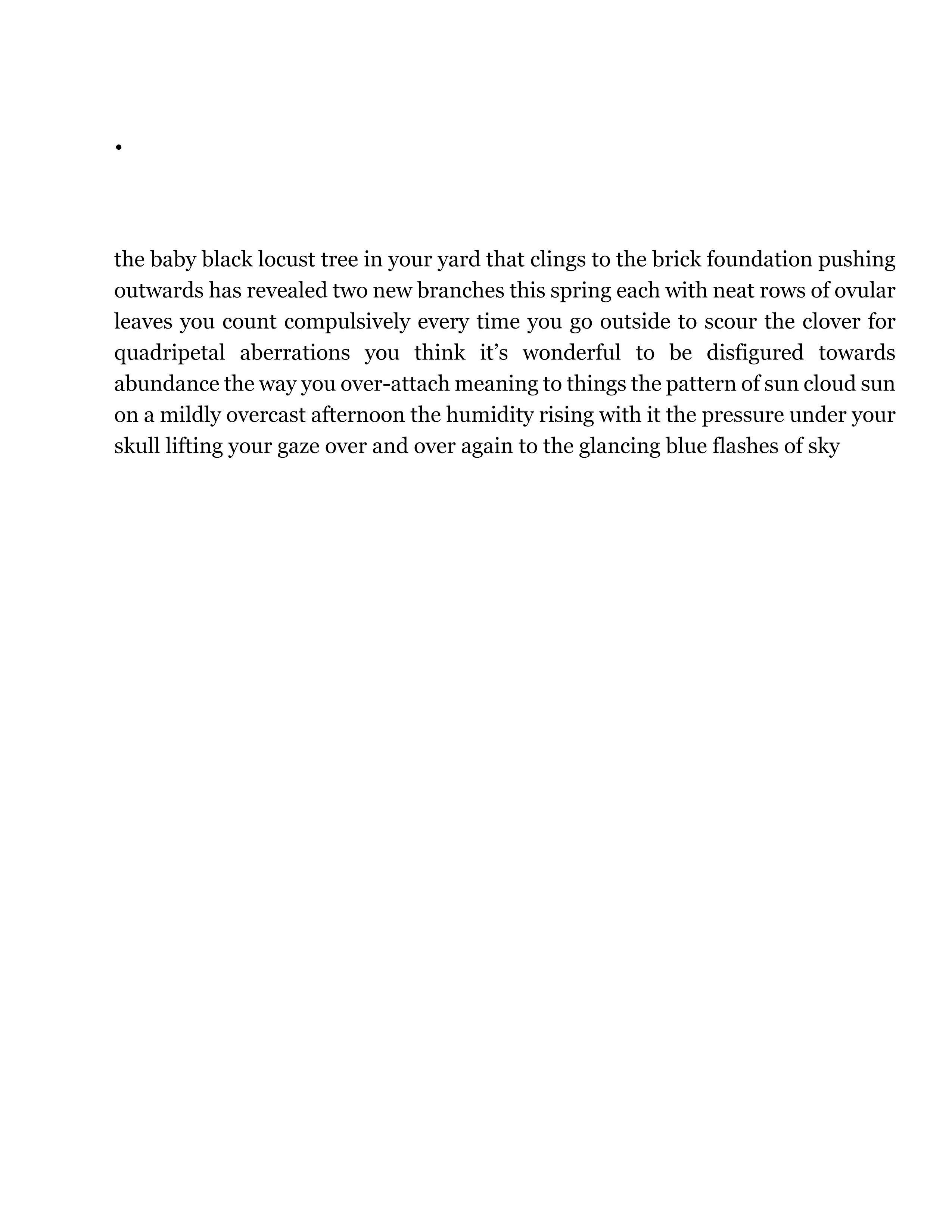
The poems that follow move through a world that is porous and buzzing with presence. In one, the speaker notices mold on kitchen grout, meat in the refrigerator that seems to breathe, a strange pressure on the chest in the middle of the night. In another, they count leaves on a small black locust tree and scour clover for four-leaf aberrations. What struck me was how the speaker moves between dread and wonder almost interchangeably, as if they are two sides of the same heightened attention. This is something I recognized in myself—the way anxiety and awe can feel nearly identical, both of them a kind of trembling alertness to the fact that the world is much more alive than we usually let ourselves believe.
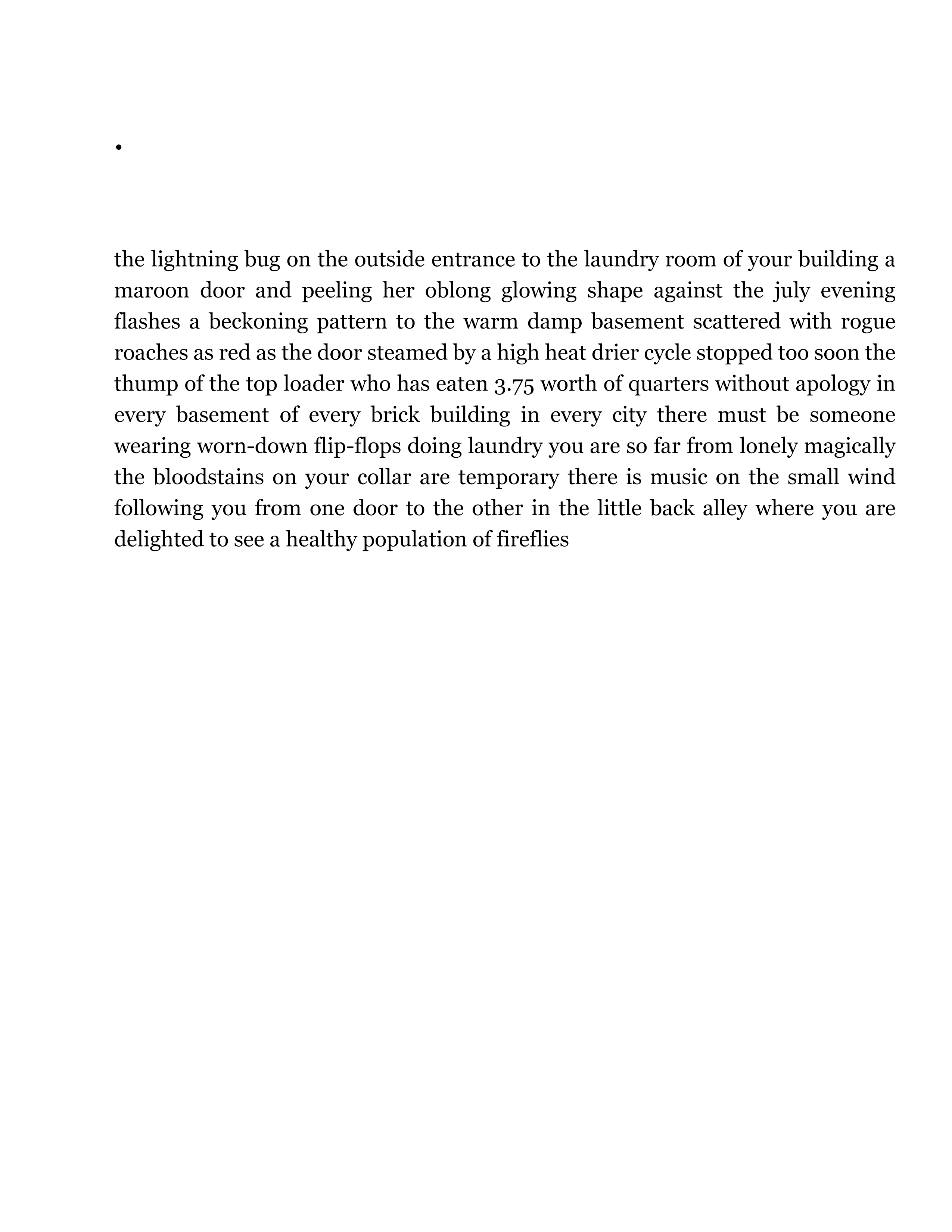
Two of the poems take place in and around a laundry room, and they are perhaps the most quietly joyful in the packet. A lightning bug flashing against a maroon door. Fireflies in a back alley. Bloodstains on a collar that are, thankfully, temporary. The speaker in these poems is alone, doing a mundane errand in a city basement, and yet they arrive at something that feels like grace: "you are so far from lonely." I found this line genuinely moving, not because it resolves the loneliness that hums through all the poems, but because it doesn't pretend to. It simply insists that in this moment, in this particular back alley with its healthy population of fireflies, something is enough. That feels true to me in a way that more triumphant declarations of joy rarely do.
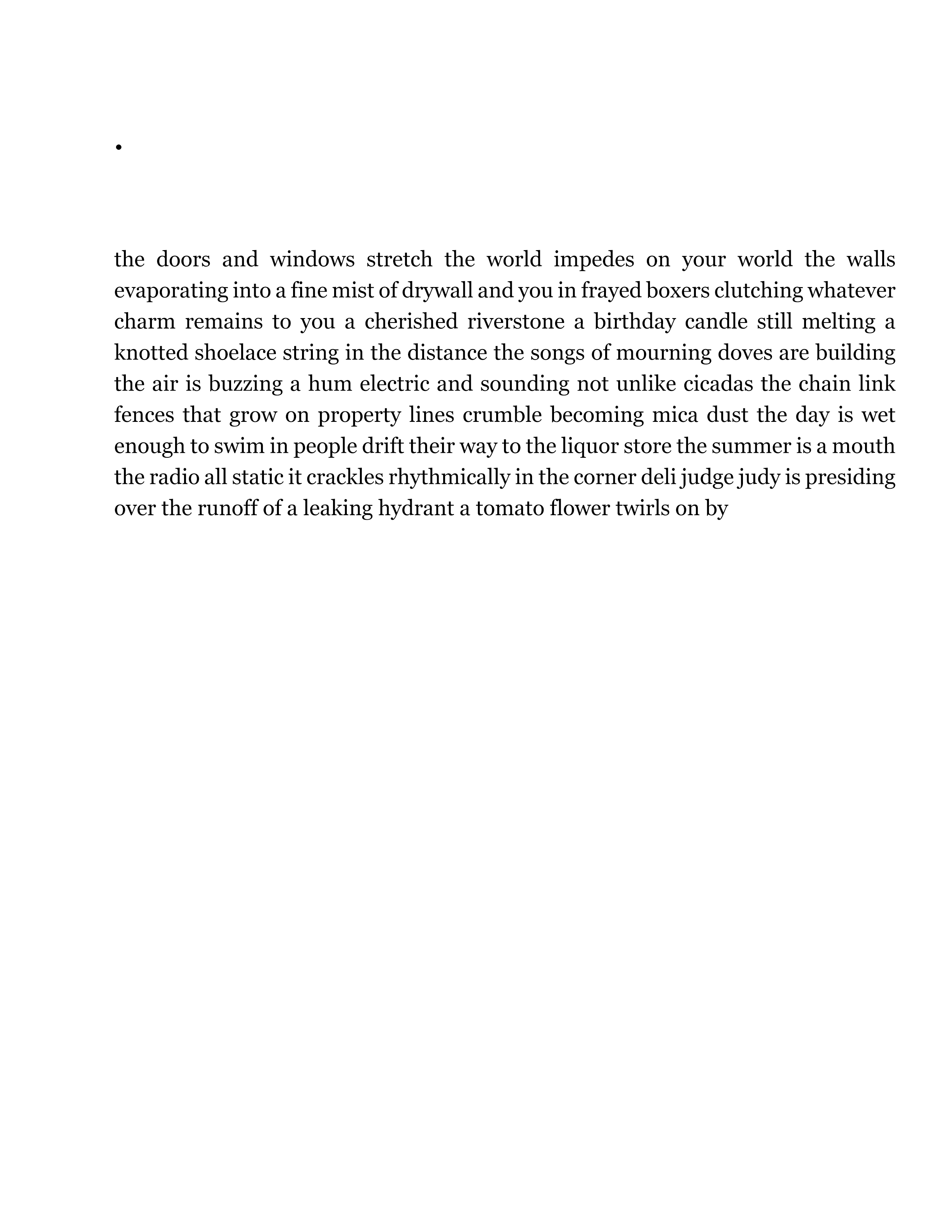
Reading this packet of poems was a reminder that literature lives in the every day. These poems live at street level and ask you to pay attention to what is already there. A tree pushing outward. A shell that hums. A tomato flower twirling past on a summer day so wet you could swim in it. I came away from these poems feeling more accompanied in the world—and its weirdnesses. That is no small thing.