
3 poems by Cal Freeman
1 essay by Claire Denson, on the poems of Cal Freeman
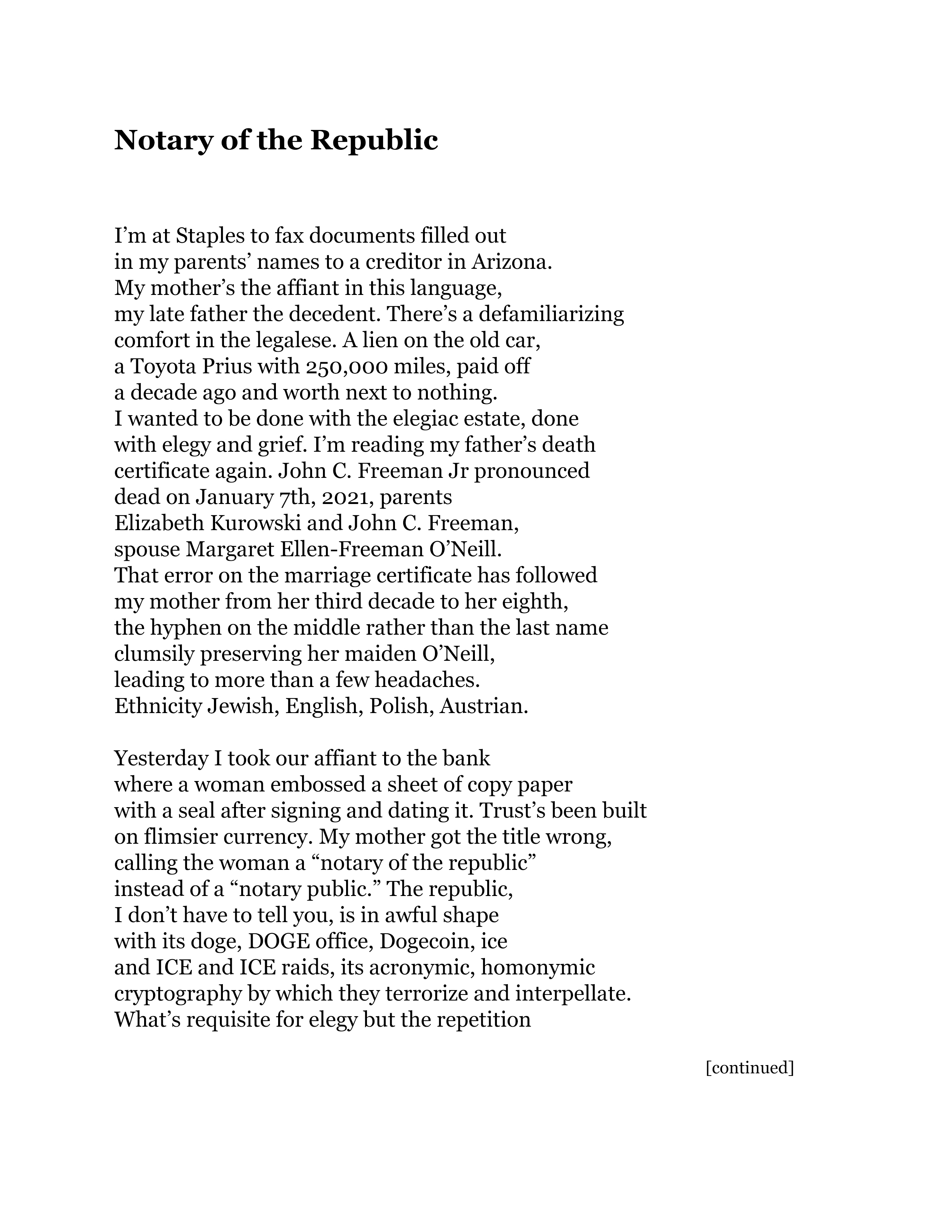
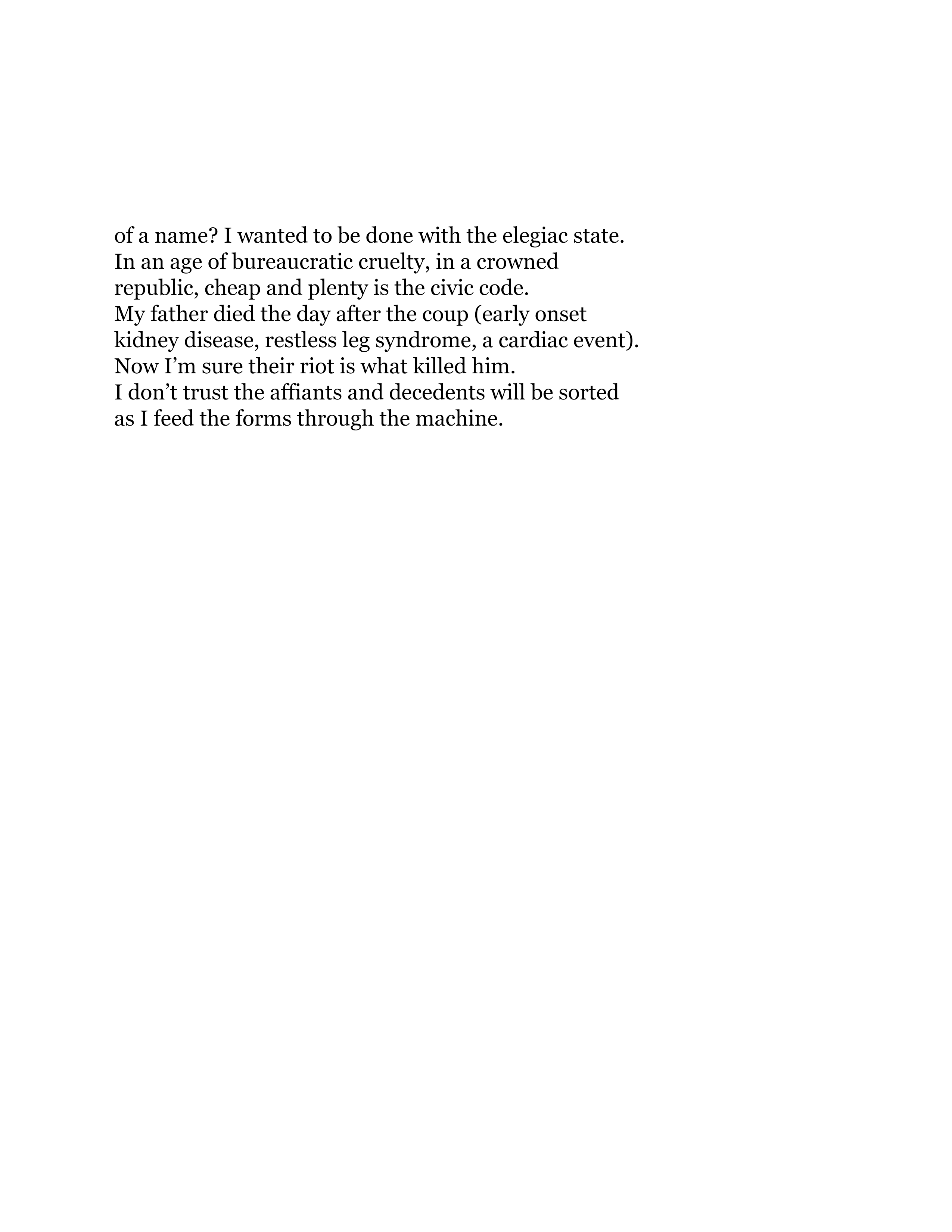
The local Staples is full of grief. Fed-Ex traffics in desolation. Those machines print wedding invitations, death certificates, local zines. It follows that a notary public inspires an elegy. Isn’t a typo how we got here? (Isn’t all of this just some sick accident?) “Notary of the Republic” blends personal and political elegy, the coincidences of dates and mistakes. Time becomes one moment as the poet mourns.
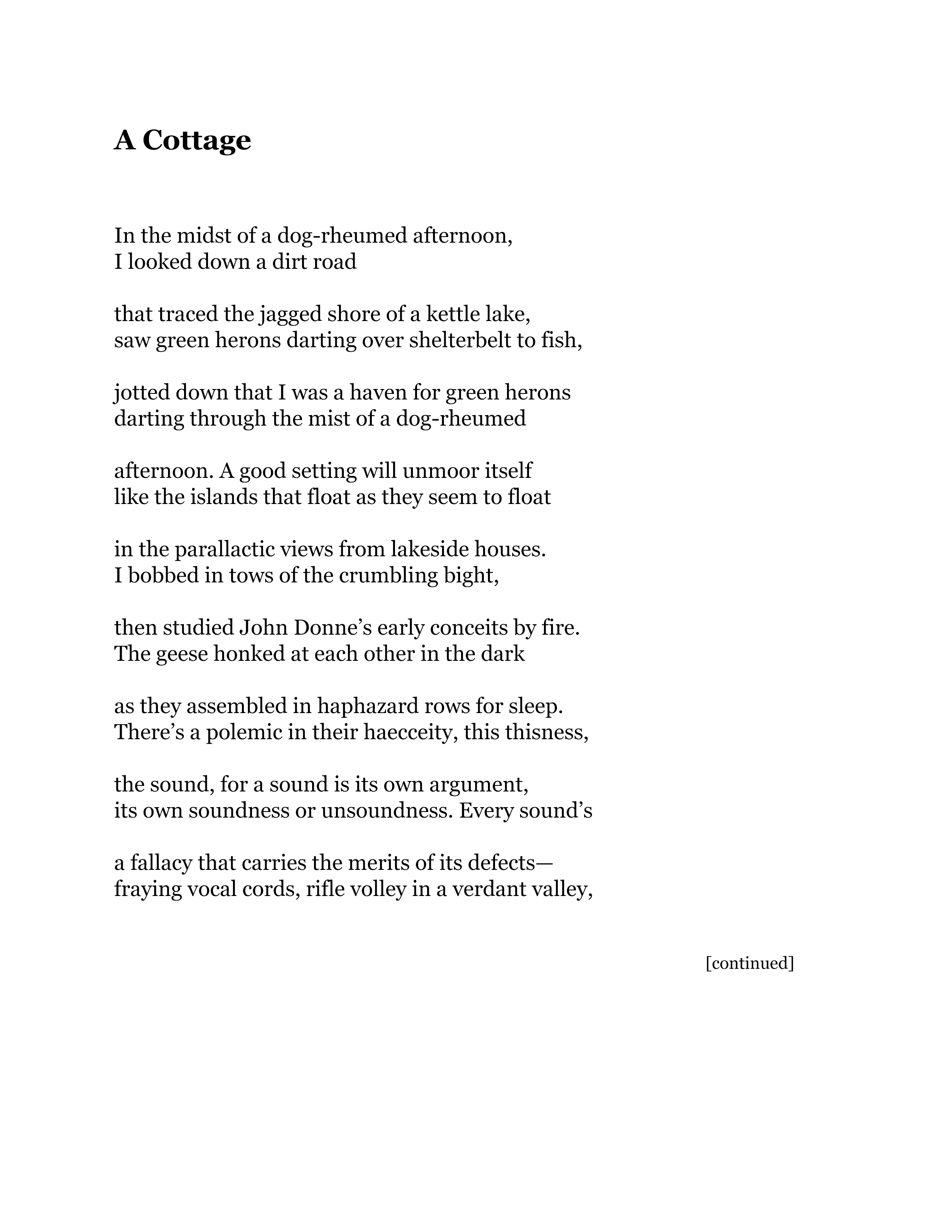
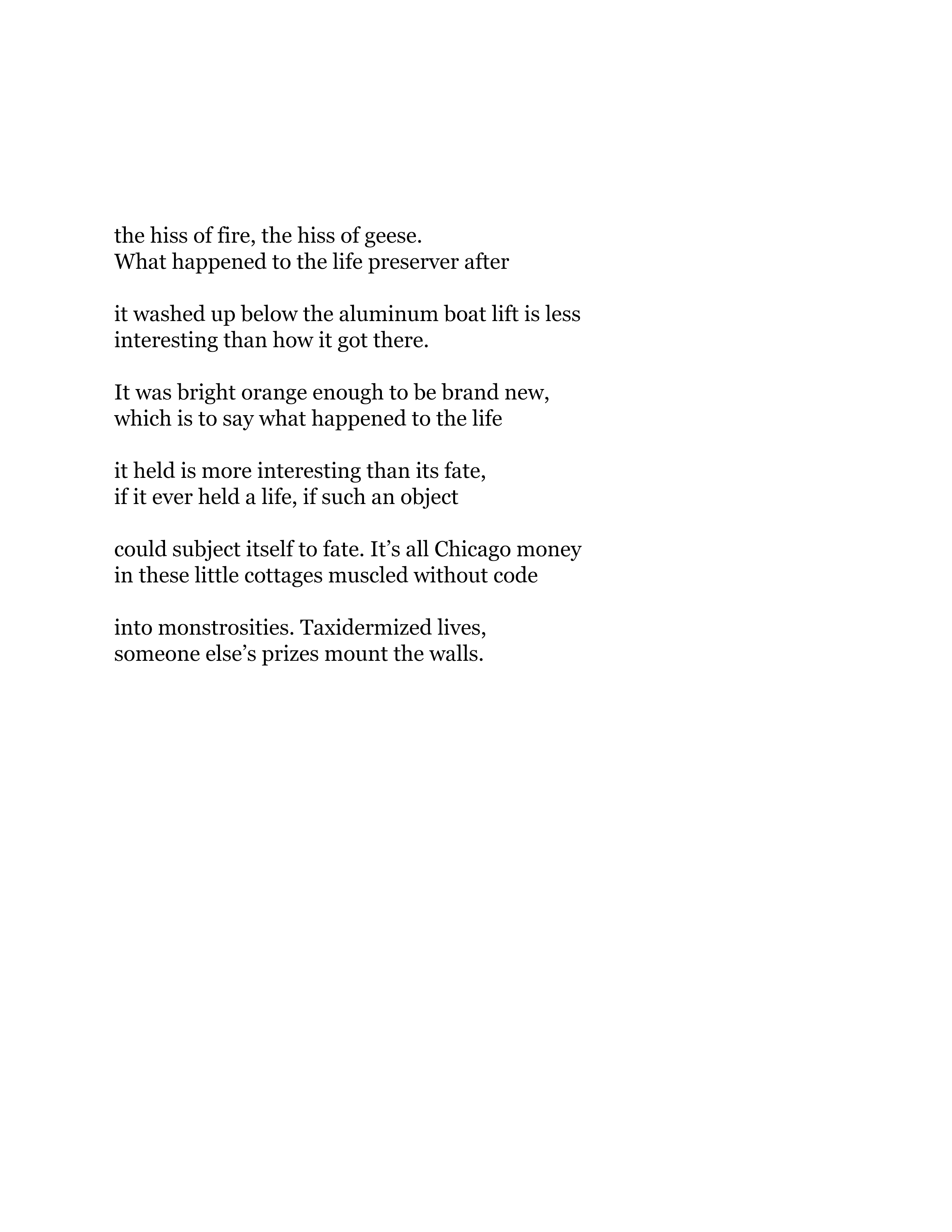
In fact, every poem is an elegy. A lament for a memory. A dirge for the self in that stage. Speaker = self - time. Poem = past + taxidermy. The speaker of these poems knows this. “They tell me the dead are restive” is another way of saying all of these sad happenings happen in a loop. In the present-future, every 4am the dead father picks up his pen.
Unfortunately for the speaker of these poems, as long as there is a poem, as long as there is a “speaker” or a “self,” there is no being “done with elegy” just as the dead go on being dead forever. There is very little requisite for elegy. A poem is an echo that insists upon itself. What happened? What happened?
Try this, lost one: if you want to call the past, go touch a phonebooth. You’re halfway there. Or send a letter to yourself. Make one piece of art, like a collage. Like a poem. You can always reach the past; i.e., I already wrote this sentence. Which means, this is the past.
What you believe is “you” is in fact elegy.